
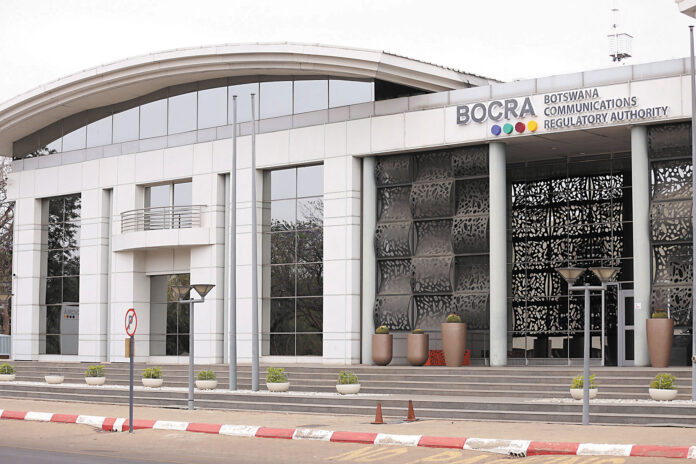


Botswana’s telecommunications market is set for a significant shake-up after the Botswana Communications Regulatory Authority (BOCRA) directed Mobile Network Operators (MNOs) to slash tariffs across a wide range of services in what is being hailed as a major step towards building a more inclusive digital economy.
The regulator announced this week that following a comprehensive costing and pricing study completed in mid-2025, it had ordered all operators to revise their retail tariffs to align with the true cost of delivering services. The directive, issued in June and implemented by August, has already resulted in noticeable price reductions-particularly for data, which accounts for the bulk of usage as Botswana deepens its digital transformation drive.
According to BOCRA, prepaid services-representing about 96 percent of mobile subscriptions-have seen the most visible changes. For example, Mascom Wireless, which controls around 40 percent of the market, has lowered the cost of data by more than 18 percent, with further price cuts introduced in SMS and off-net calls. Orange Botswana, the largest operator with a 46 percent market share, has followed suit, while Botswana Telecommunications Corporation (BTC), holding 14 percent of the market, has adjusted its tariffs to remain competitive.
The Authority stressed that the revised prices are ceilings, meaning operators are free to offer even lower prices. BOCRA is also encouraging MNOs to roll out more bundled packages, which combine voice, data, and SMS services at discounted rates, to give consumers greater value for money.
In addition to retail tariffs, wholesale prices are also under review. BOCRA has engaged Botswana Fibre Networks (Bofinet), the country’s largest wholesale broadband provider, to lower the costs at which it sells capacity to MNOs and internet service providers. The review process is expected to be completed by September 2025 and is seen as critical for fostering fair competition and ensuring that cost savings at the wholesale level trickle down to end-users.
Another notable development is the reduction of mobile termination rates-the charges operators levy on each other to carry voice calls across networks. Effective July 2025, termination rates have been cut from 13 thebe to 9 thebe per minute, and will continue to decline on a glide path until they reach just 2 thebe in 2027.
BOCRA stated that the move is aimed at promoting transparency, stimulating competition, and ensuring that consumers make informed choices. Publishing approved tariffs publicly, the regulator added, would prevent information gaps and strengthen trust between service providers and subscribers.
The reforms are also closely tied to the government’s broader Botswana Economic Transformation Programme, which identifies Information and Communications Technologies (ICTs) as a central driver of growth across all sectors of the economy. By lowering costs, the regulator hopes to unlock new opportunities for digital innovation, e-commerce, e-government services, and financial inclusion.
“Affordable communication services are no longer a luxury but a necessity in driving socio-economic development,” BOCRA said in its statement, reaffirming its commitment to monitoring market behavior and safeguarding consumer rights.
With tariffs now reduced and further wholesale adjustments on the horizon, consumers in Botswana could be entering a new era of cheaper, more accessible mobile services that match the country’s ambitions of becoming a fully digital economy.


