
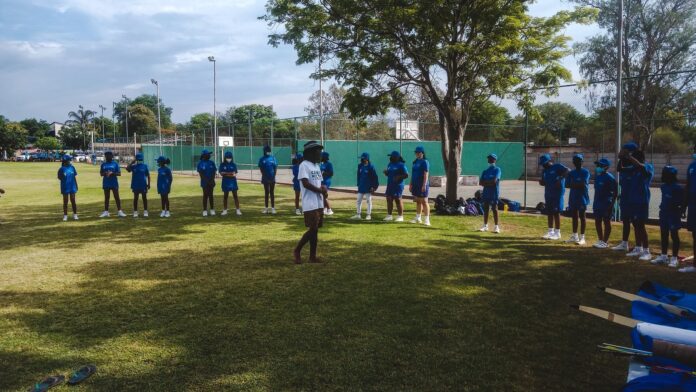

President Duma Boko used his 2025 State of the Nation Address (SONA) to reposition sport as a central pillar of youth development, national identity, and economic opportunity. After years of declining participation and fragmented policy support, Boko signaled a renewed commitment to rebuild Botswana’s sporting ecosystem from the ground up.
Boko said sport “extends far beyond individual well-being and leisure,” stressing that it holds “immense potential to contribute to the economy.”
In positioning sport as both a social good and an economic driver, the President underscored its growing role in employment creation, brand-building, and the global creative economy.
A key intervention announced is the reintroduction of sports in schools, a policy reversal long demanded by athletes, coaches, and administrators who argued that removing physical education and school competitions had weakened Botswana’s talent pipeline. Boko described the return of school sports as “a valuable investment in the future,” explaining that it will “enable us to nurture elite athletes, performers, actors, and diverse creative talents.”
In positioning sport as both a social good and an economic driver, the President underscored its growing role in employment creation, brand-building, and the global creative economy.
His framing is deliberate. Botswana has recently achieved historic sporting milestones, including the country’s first men’s 400m world champion and first Olympic gold medalist. Boko used these achievements to highlight the nation’s potential when talent is properly nurtured. Rebuilding school-based sports is meant to ensure that these victories are not isolated flashes, but the beginning of a competitive sporting tradition.
The SONA also linked sport to broader reforms in the creative industries. With government updating policies and legal frameworks in areas like film, digital arts, and content creation, the President argued that sport must be developed alongside the creative economy as part of a unified cultural industries strategy. This reflects a global shift where sport intersects with entertainment, media, branding, and youth entrepreneurship.
To that end, the administration is pursuing a coordinated approach where training, competitions, and creative expression reinforce one another. School sports are intended not only to build athletes, but also to feed photographers, commentators, designers, performers, and young entrepreneurs who support sporting events and teams.
While the SONA did not provide financial details on specific sports programmes, the President’s narrative suggests that funding, infrastructure rehabilitation, and structured competitions will follow. The return of school-based sport will require substantial investment in facilities, coaching, equipment, and teacher training. The government’s broader education reforms—especially the shift toward a STEAM-driven curriculum—are expected to integrate physical development and creativity under one coherent system.
Boko’s tone reflected both urgency and optimism. With youth unemployment at 38 percent, sport is being positioned as one of the avenues to offer young people structured opportunities, discipline, and possible careers. Government’s new Presidential Youth Empowerment Campaign (PYEC) also includes pathways linked to sports and the creative industries, framing them as legitimate economic sectors rather than mere extracurricular activities.


