


Agriculture emerged as one of the most aggressively targeted sectors in the SONA, with President Boko announcing sweeping reforms aimed at reversing decades of decline and boosting national food security.
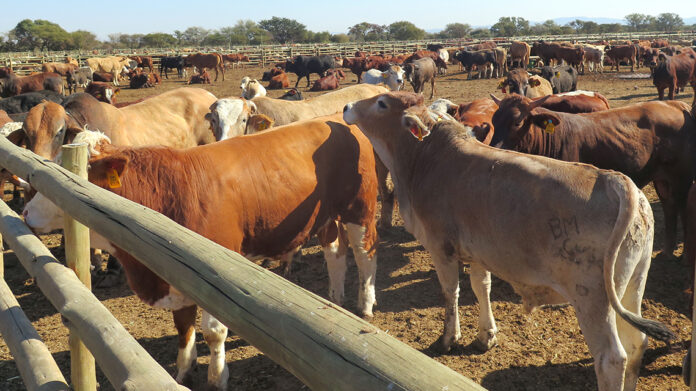
Boko noted that agriculture currently contributes only 2% to GDP, a figure the government aims to raise to 6% in the immediate term. Central to this transformation is livestock production. Government plans to grow the national cattle herd from 1.7 million to 5 million by 2030, supported by a new programme focused on animal health, artificial insemination, reproductive diagnostics, and farmer training.
“The national cattle herd has declined… to an estimated 1.7 million, with off-take rates languishing at 6% against a recommended 15%,” he said, announcing new extension support initiatives to reverse the trend.
Government plans to grow the national cattle herd from 1.7 million to 5 million by 2030.
The SONA highlighted notable gains:
- A 34.2% increase in the national planted area in 2024/25.
- Domestic horticulture now meeting 80% of national vegetable demand.
- A turnaround at the Botswana Meat Commission, whose payment cycle has improved to seven days, with Ngamiland farmers now receiving instant payments through the Direct Cattle Procurement Scheme.
Government also confirmed major investments in the dairy sector, including the importation of 1 000 Girolando cattle from Brazil and out-grower schemes to support Milk Valley’s expansion.
In a groundbreaking policy shift, Botswana will introduce industrial hemp and medicinal cannabis cultivation, supported by Hemp Innovations under a new MoU. Boko said trials will begin in December 2025 and emphasized that “the Cannabis Act… has been passed into law to facilitate investment in the hemp industry.”


