
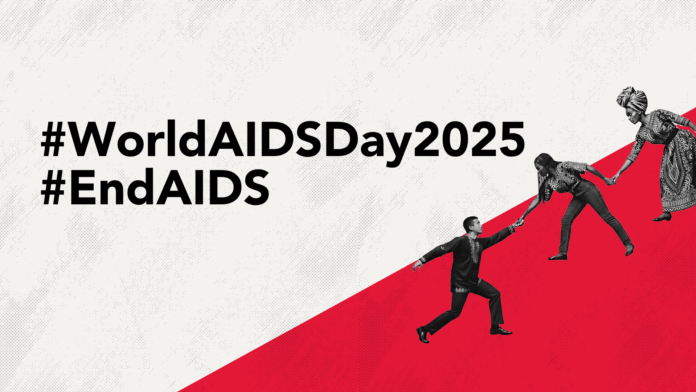


The more things change, the more they stay the same!
Success Capital observes World AIDS Day in absentia as it is held in Kanye. This is attributed to our community health programme being curtailed by bureaucrats responsible for social contracting at a state agency that abused its power and continue to do so despite significant interventions from the Ministry for State President over the past 7 months. Last year’s commemoration in Tlokweng was to be led by His Excellency President Duma Boko, however in his place, was Vice President and Minister of Finance, His Honour, Ndaba Gaolathe. His Honour acknowledged the contributions of civil society in the country’s HIV response, noting them as “invaluable”. He also mentioned the need to address gender disparities in accessing health services and increasing infection rates through “innovative strategies needed to improve prevention and ensure equitable access to services.” He further noted: “This calls for innovative financing and greater investment from the government, private sector, and international partners to ensure that the gains made are not lost.”
His Honour led consultations on resource coordinating efforts with civil society umbrella bodies and networks trying to ascertain the extent of impact US government funding cuts had. Nothing came from this and since then, only civil society level consultations facilitated by technical partners quarterly.
Success Capital’s attempts to gain an audience through the respective offices of His Honor including the constituency office (since August) and at Office of the President (since March) have been in vain. His Honour has been selective to which civil society he interacts with, as he has attended dinners, given keynote remarks and even personally signed off correspondences to non-state actors in close proximity to power or money. A formal correspondence from March was only responded to in September – signed off by an unelected support staff member. Reflecting how ordinary Batswana without the right surnames, institutional power or bank account are treated: little regard, zero respect and longstanding inequity.
UNAIDS reports challenges that emerged with funding cuts. Including mental health and gender-based violence as part of intervention shortcomings globally. Also, that voluntary male circumcision between December 2024 and June 2024 reduced by 88% in Botswana. The report also celebrates Botswana meeting the Abuja Declaration, where 15% of a states budget is allocated to health, citing an Africa CDC 2025 report, which also cited a WHO 2023 report. Most likely observing expenditure during one of the longest COVID-19 pandemic states of emergency with high levels of documented corruption and maladministration. The current financial year’s budget speech and the grassroots civil society resolution reflect otherwise. The UNAIDS report reiterates the importance of community-led organisations as the backbone of the HIV response, with access to those most hard to reach in HIV interventions. Where many have shut down and “more than 60% of women-led organizations suspended essential programmes. Services for key populations including men who have sex with men, sex workers, people who inject drugs and transgender people have also been severely impacted.”
UNAIDS, the joint effort of 11 UN agencies led by member states at board level, further includes the following in its call to action: “we must strengthen community-led action, because communities are at the heart of every successful response. Their voices, leadership, and lived experience drive progress and accountability.” Community organisations have been proven, as reiterated by the UN Secretary General, to be the early warning mechanism for risks to communities, whether its new laws or community experiences. This is why Success Capital has not stopped its advocacy and minimalist health prevention and promotion activities despite essentially losing project staff and presence because of what His Excellency recently deemed public officers’ “rigidities”, “retinized sluggishness”, “reticence”, “inability to respond instantly, decisively, boldly, objectively to pressing entrenchent (sp) problems.”
In the spirit of focusing on the “real issues” that H.E. called upon, is the need for ensuring evidence based, community led and driven interventions. A recent HIV study in Greater Gaborone revealed a reduced likelihood of contracting HIV among a study cohort if participants had completed secondary school education or higher. This reflects why Success Capital’s 2024 SONA Review, Budget Speech review, 2025 SONA review and comprehensive sex education advocacy push for better education interventions – including for out of school youth. The study had no correlation of new infections with factors such as sex, age, employment status, or nationality. The study further looked at the 5th Botswana AIDS Impact Survey that revealed a lack of knowledge on one’s HIV status for youth between 15 and 24 years old, possibly identified as a target group to prevent new HIV infections. The report further makes it clear: “There is ongoing transmission of HIV despite all interventions put in place within the country.” Presenting a structural challenge rather than an epidemiological one. Where social determinants ultimately sustain and influence health outcomes.
Another study in Greater Gaborone found that many study participants were taking Antiretroviral Therapy (ART) without telling health practitioners, even sharing that they had never been exposed to ART before. With reasons found such as “stigma, defaulting/non-adherence, denial of first HIV test results or shared drug use which contains ARVs”. It also noted other studies that identified young people with high proportions of non-disclosure to health practitioners. These challenges can be addressed by community health mechanisms that ensure client retention, follow-up and stigma free services. They also raise concern about whether individuals disclose their status in intimate relationships or with sexual partners. As standard contact slips issued in health facilities might not be forwarded to partners. As a community health provider, Success Capital is deeply entrenched in community experiences: navigating social media, peer pressure and mental health complexities whilst ensuring health promotion, HIV prevention and response referral services. This cannot be sustained without government investing in community health organisations, a best practice deployed in Kenya, South Africa and many other countries where Global Fund invests.
Botswana’s HIV Prevention Road Map 2023-2025 reflects inconsistency and shortcomings of the national coordinating agency’s role in ensuring alignment, oversight, accountability, and efficient multisector HIV prevention delivery, including integrating community-led and community-based organisations into national planning. Instead, there is inconsistency in reporting, lack of representation of community organisations in technical groups, incomplete HIV prevention data flows into the National Data Warehouse, and poor social contracting despite guidelines being finalised this year. It also notes fragmented systems, inconsistent key population package delivery and no coherent standardised accountability. Success Capital observes these insights from the report as valid, by design, imbued by political patronage, favouritism, shortcomings in safeguarding and unethical practices. As the report relays how what is on paper is not reflected in practice. Notably addressing community level gaps. Domestic resource mobilisation for public health will remain a myth for Botswana as the economy contracts and its debt positioning worsens. There was no impact review or evidence of success of the recent state of public health emergency. Rather than improve the situation, it affirms how the government is not managing public health decisively and in the interests of all Batswana. Sporadic announcements of commodity disbursement provide little comfort for analysis to better understand which health systems issues are impacted. Leaving little for civil society to work with to try to assist or augment where possible. It does not reflect a government working towards universal health coverage.
Barriers to meaningful, inclusive and equitable HIV response measures remain skewed, leaving diverse grassroots communities that include sex workers, LGBTIQ+, people with disabilities and indigenous groups at risk of new infections, co-infections and inadequate mental, reproductive, and community health interventions. Legal reforms are needed to improve health outcomes for these communities.
The UDC commitment to “revitalise the national response to HIV and improve access to quality treatment, care and support service for patients, prevent new HIV infections through provision of condoms and public education, information and communication, and effectively coordinate partner support in the health sector” remains a myth. The move of the National AIDS and Health Promotion Agency to the Ministry of Health reflects how the HIV response and non-communicable diseases are no longer a priority. The continued receipt of donations and grants announced over the past two months create a worrying trend; that Botswana will continue to depend on external stakeholders as if it is a lowincome country. It further proves that government alone cannot coordinate and strengthen public health infrastructure in its current state, almost a year after decentralising. Our countrywide community dialogues validate these concerns as further affirmed by the 5 + 1 cooperating unions that have consistently had to counter disinformation, raise alarm or defend workers [and essentially, patient] rights. Localising ‘overcoming disruption, transforming the AIDS response’ theme remains a myth.
“As the government pushes for ratifying other international instruments, the ideal starting point should be at home, domestically. Such as guaranteeing the right to health and making socioeconomic rights justiciable. These have failed despite ratifying the Maputo Protocol and the CRPD, which both explicitly include socioeconomic rights and should be fully domesticated with urgency. This will ensure citizens’ pathways to improved service delivery and the progressive realisation of their rights. If government is serious about human rights, then it should resource and accelerate the implementation and operationalisation of the laws it already in place, such as the Sexual Offenders Registry Bill 2020 and the implementation of Mental Health Act 2023. We call for recommitting to ensure no one is left behind and deploying best practices in social participation as heralded by Botswana’s Presidency of the World Health Assembly in 2024. We also call for the electoral promise 1% of the national budget towards civil society and “retired persons development programmes”, this should be backed by improving representation from the regular faces and institutions that have benefited from proximity to power over the last two decades. The demographics of new infections, inequities and emerging new civil society efforts reflect the majority of this country – young people who are persistently denied opportunity, fulfilling potential and pioneering their creativity. Blogs, cover letters and email outboxes are filled with deferred dreams and fizzled ideas. Let young people change the trajectory of human development in this country by getting out of the way and creating an enabling environment for them to thrive.” closed Dumi Gatsha, Director of Success Capital


