


Botswana recorded its second consecutive monthly trade deficit in May, a sign of the pressures facing an economy still heavily dependent on mineral exports.
According to the latest International Merchandise Trade Statistics (IMTS), the country registered a trade deficit of P3.2bn in May 2026, following a larger shortfall of P4.4bn in April. Imports continued to exceed exports, although the value of goods entering the country declined modestly during the month.
Imports were valued at P8.1bn, down 4.1% from P8.4bn in April. The decline was driven chiefly by a sharp fall in vehicle and transport equipment imports, which dropped by 67.2%, or P915.2m. Imports of machinery and electrical equipment also fell by 15.8%, equivalent to P227.8m.
Fuel and diamonds remained the country’s largest import categories, accounting for 24.5% and 19.1% of total imports respectively. Machinery and electrical equipment contributed 15%, while food, beverages and tobacco made up 13.9%.
The Southern African Customs Union (SACU) remained Botswana’s dominant source of imports, supplying 69.6% of the total. Asia accounted for 11.8%, while the European Union contributed 6.4%.
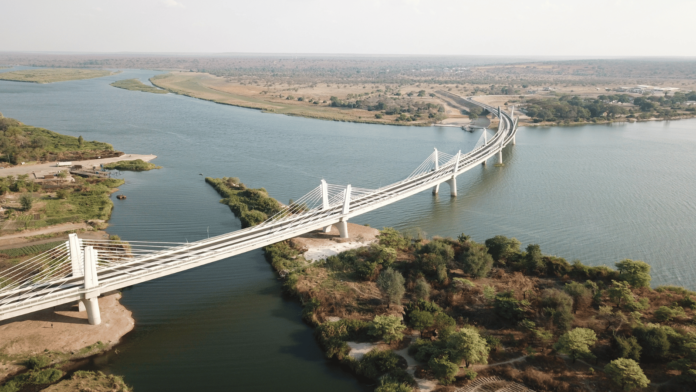
Botswana also continued to play an important regional transit role. Goods worth P26.7bn passed through the country en route to other destinations during the month. Pioneer Gate processed the largest share of transit cargo, handling 42.1% of the total. Kazungula Bridge accounted for 29.7%, while Ghanzi processed 25.7%.
South Africa was by far Botswana’s largest supplier, accounting for 57.4% of imports. Namibia followed at 11.8%.
Exports, however, fell more sharply than imports. The value of goods sold abroad declined by 22.4% to P4.8bn in May, from P6.2bn the previous month.
The drop was driven largely by weaker diamond and copper exports. Diamond exports fell by 23.1%, or P856m, while copper exports declined by 27.9%, or P477.9m. Despite the decline, the two commodities remained Botswana’s principal export earners, accounting for 59% and 25.6% of total exports respectively. The figures once again highlighted Botswana’s dependence on mineral exports and the volatility that accompanies fluctuations in global commodity demand. Asia remained the country’s largest export market, absorbing 58.5% of exports. SACU received 15%, while the European Union accounted for 8.8%.
At the country level, the United Arab Emirates was Botswana’s leading export destination, taking 27.8% of total exports. China and India followed with 14% and 12.9% respectively. South Africa and Australia accounted for 11% and 10.2%.
Transport data reflected the structure of Botswana’s trade flows. Nearly three-quarters of imports, 72.2%, entered the country by road. Air freight accounted for 19.7%, while rail carried 8.1%.
Exports, by contrast, were dominated by air transport, which handled 59.5% of outbound goods. Road transport accounted for 39.4%, with rail contributing just 1.1%.
Botswana also continued to play an important regional transit role. Goods worth P26.7bn passed through the country en route to other destinations during the month. Pioneer Gate processed the largest share of transit cargo, handling 42.1% of the total. Kazungula Bridge accounted for 29.7%, while Ghanzi processed 25.7%.
The figures suggest that while import demand remains relatively resilient, weaker mineral exports continue to weigh on Botswana’s external trade position, leaving the country vulnerable to shifts in global commodity markets.


