
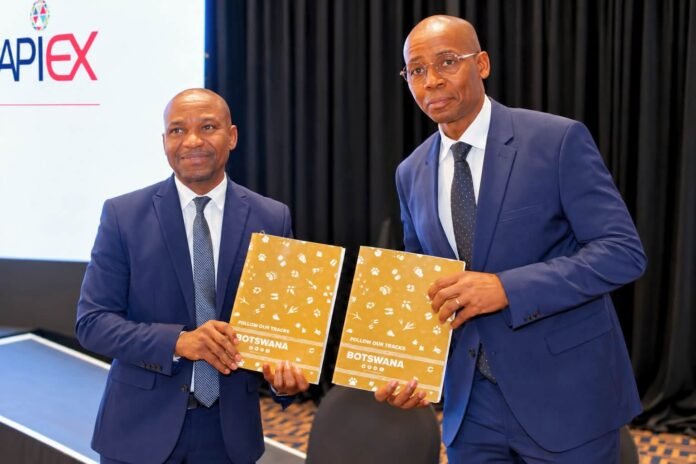

The Botswana Tourism Organisation (BTO) and Mozambique’s National Agency for Tourism Development and Investment, Public Fund (ANDITUR, PF) have signed a Memorandum of Understanding (MoU) aimed at strengthening tourism cooperation and unlocking new investment and growth opportunities between the two countries.
The agreement was signed by Botswana Tourism Organisation Acting Chief Executive Officer Justice Ofentse and ANDITUR President of the Board of Directors Helder Jauana.
The partnership establishes a framework for collaboration across key tourism areas, including investment promotion, destination marketing, tourism research and market intelligence, sustainable tourism development, quality assurance, Meetings, Incentives, Conferences and Exhibitions (MICE), skills development and private-sector participation.
The MoU further provides for cooperation on improving air connectivity, route development and visitor mobility between the two destinations, creating opportunities to enhance travel convenience and support tourism growth.
A major focus of the agreement is the development of multi-destination tourism packages that combine Botswana’s renowned wildlife and nature-based attractions with Mozambique’s beach and marine tourism offerings. The two countries will also explore joint marketing campaigns, familiarisation trips, tourism packaging and investment promotion initiatives designed to attract international visitors and investors.
The MoU further provides for cooperation on improving air connectivity, route development and visitor mobility between the two destinations, creating opportunities to enhance travel convenience and support tourism growth.
Officials said the agreement will be supported by structured institutional coordination mechanisms to ensure the partnership translates into practical programmes and measurable outcomes.
The collaboration is a sign of shared commitment by Botswana and Mozambique to deepen regional tourism integration, increase visitor flows and strengthen the competitiveness of Southern African destinations in global tourism markets. The agreement comes as countries across the region seek greater collaboration to diversify tourism offerings, attract higher-value visitors and leverage complementary attractions to boost economic growth and job creation through the tourism sector.


