


When President Duma Boko declared last year that Air Botswana would return to profitability by the end of 2025, the pledge was meant to indicate a new era of discipline for the loss-making state enterprise. However, reality shows that the turnaround remains elusive.
Responding to a question from Dumelang Saleshando, leader of the opposition, Assistant Minister of Transport and Infrastructure Keoagile Atamelang confirmed that the national airline had not achieved profitability by December 2025. The president’s target has been missed, despite repeated assurances that the carrier was on track to recover.
The minister told parliament that management had adopted a short-term turnaround plan after identifying weak revenue generation and high operating costs as the main causes of continued losses. Among the first steps was the trimming of the airline’s network from August 2025, including the suspension of the Gaborone-Durban, Gaborone-Windhoek and Maun-Windhoek routes, which were unable to cover direct operating costs. The cuts were said to have saved about P44m in five months, showing the extent to which unprofitable routes had been weighing on the airline’s finances.
Low passenger numbers remain a deeper problem. According to the minister, poor load factors stem from loss of market share, intensifying competition and declining public confidence caused by unreliable operations. Aircraft shortages and crew constraints have frequently disrupted schedules, making it difficult for the airline to retain customers in a regional market where travellers have alternatives through foreign carriers and charter operators.
Air Botswana has relied heavily on public funding for years, with parliamentary disclosures showing that more than P800m has been injected into the carrier since 2019 to support fleet purchases, maintenance and salaries. Reduced travel by government departments and parastatals ,once a dependable source of passengers, has further squeezed revenues.
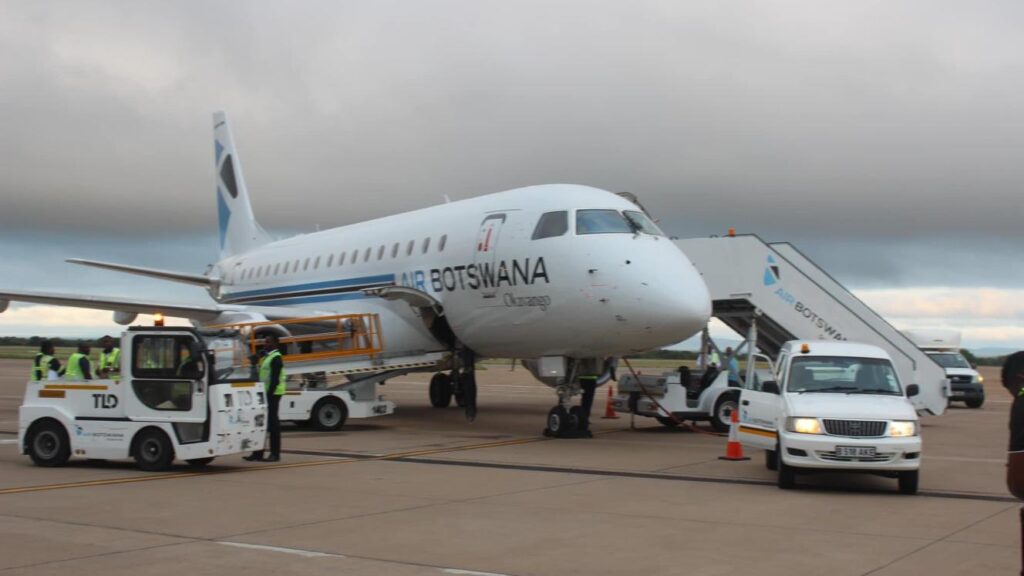
The government’s recovery plan centres on restoring operational reliability. A heavy maintenance check on one ATR72-600 has increased the number of available aircraft, while two grounded ERJ145 jets are being returned to service after certification and repatriation. A crew re-qualification programme is also under way to ensure standby personnel for each aircraft type, alongside new sales incentives for travel agents and tour operators aimed at boosting ticket sales.
Even if these measures succeed, the airline faces structural obstacles that have long frustrated reform efforts. Air Botswana has relied heavily on public funding for years, with parliamentary disclosures showing that more than P800m has been injected into the carrier since 2019 to support fleet purchases, maintenance and salaries. Reduced travel by government departments and parastatals ,once a dependable source of passengers, has further squeezed revenues.
External pressures are adding to the uncertainty. Rising fuel prices and delays in overseas training for crews threaten to slow the latest turnaround plan before it gains momentum, the minister warned.


