


Amid heightened global uncertainty and tightening financial conditions, Africa’s financial markets have shown a surprising degree of resilience. The Absa Africa Financial Markets Index (AFMI) 2025 notes that Gross Domestic Product (GDP) growth expectations improved in 22 African countries, highlighting the continent’s growing adaptability. Central to this resilience is the role of domestic institutional investors particularly pension funds in mobilising long-term capital. Botswana stands out as one of the clearest examples of how pension assets can support economic stability and capital market development, while also revealing the structural constraints that remain across Africa.
Pillar 4 of the AFMI evaluates the development of pension systems and their contribution to local capital markets. Overall performance weakened in 2025, with Pillar 4 scores declining in 19 countries, largely due to pension fund assets failing to keep pace with the growth of domestically listed securities. Yet Botswana remains among the strongest performers on the continent, recording the highest pension fund assets per working-age person in Africa, at $6,289.
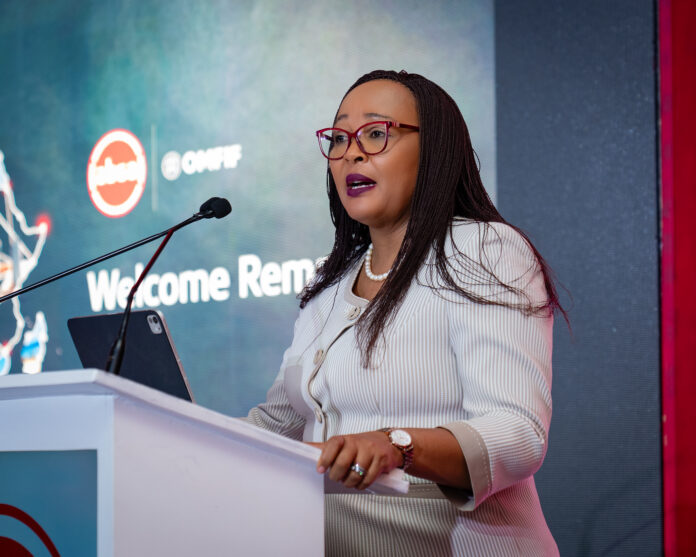
Speaking at the AFMI report launch recently, Absa Bank Botswana, Managing Director, Keabetswe Pheko-Moshagane expressed that, Botswana continues to hold the highest pension-fund assets per working-age person in Africa, underscoring the strength of the long-term savings institutions.
“These strengths continue to anchor Botswana’s reputation for stability, while the Index also highlights opportunities to further deepen liquidity, broaden the product set, enhance legal enforceability and accelerate innovation,” she said.
A long-term success story
Botswana’s pension fund success reflects decades of disciplined savings accumulation, relatively strong governance frameworks and a stable macroeconomic environment. Alongside Namibia, Eswatini and Seychelles, Botswana scores 100 in the pension asset per working-age person component of the index. This places the country far ahead of most African peers, many of which still record pension assets below $100 per working-age person.
A distinguishing feature of Botswana’s approach is its gradual pension fund repatriation policy, which mandates that at least 50% of pension assets be invested domestically by 2028. This policy aims to curb capital flight, support domestic infrastructure development and ensure that long-term savings contribute more directly to local economic growth. Survey respondents highlighted that targeted domestic investment could play a meaningful role in stabilising the economy and financing development priorities.
In a regional context where pension coverage remains critically low only about 9.6% of Africa’s working population contributes to a pension scheme Botswana’s asset depth positions it as a potential anchor for capital market expansion.
Constraints beneath the strength
Despite its large pension asset base, Botswana faces challenges common to many AFMI economies. Domestic capital markets remain relatively shallow, limiting the range of investable assets available to pension funds. As a result, pension portfolios remain heavily concentrated in government securities, reflecting both conservative regulatory limits and a shortage of liquid alternatives such as corporate bonds, equities and structured products.
This concentration constrains market development. Pension funds, by their nature, require both depth and liquidity to manage long-term obligations. Where markets lack scale, even well-capitalised funds struggle to diversify meaningfully. The AFMI 2025 highlights this as a continent-wide issue: outside South Africa where pension assets exceed 60% of GDP most African countries record pension assets of less than 20% of GDP, with limited channels for productive deployment.
For Botswana, the next phase of pension system development will depend less on asset growth and more on market capacity. Expanding the domestic investment universe will be critical through infrastructure bonds, corporate debt, equity market deepening, and alternative assets such as private equity. Continued regulatory evolution will also be needed to balance prudential safeguards with greater flexibility for diversification.
Botswana’s experience underscores a broader lesson for Africa, strong pension systems can provide a stable source of long-term capital, but their impact depends on the depth and sophistication of local markets. As African economies seek to finance growth internally and reduce reliance on volatile external flows, Botswana offers a model of what is possible and a reminder that pension reform and capital market development must advance together.


