
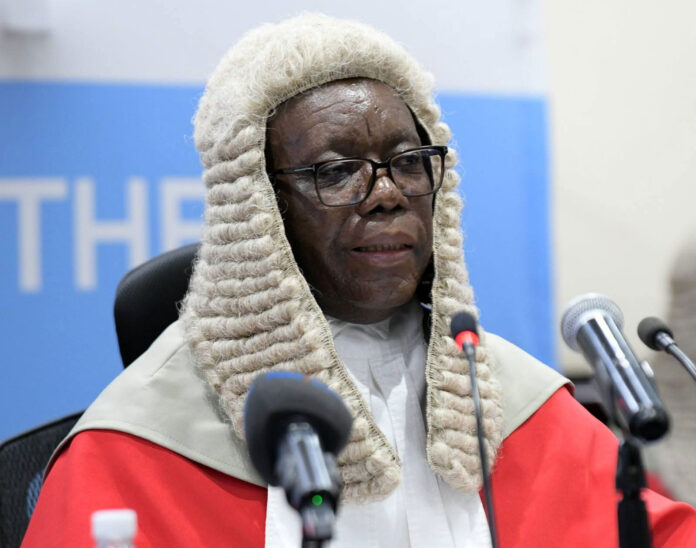

Chief Justice Gaolapelwe Ketlogetswe has pledged an ambitious overhaul of the judiciary, promising structural reforms, new specialized courts and greater accountability as part of a drive to restore public confidence in the justice system.
Delivering his address at the opening of the 2026 Legal Year in Gaborone, Chief Justice Ketlogetswe framed the courts not merely as arbiters of disputes but as a public service institution whose legitimacy rests on efficiency, accessibility and trust.
“A healthy democracy relies on courts that are effective and efficient, accessible and accountable to the public,” he said. “The judiciary exists to serve the people.”
The address marked one year since Ketlogetswe assumed office, a period he described as one of intense reform aimed at repositioning the judiciary as a credible and dependable institution. He acknowledged both progress and persistent challenges, notably resource shortages, infrastructure decay and case backlogs that have strained the courts and frustrated litigants.
The Chief Justice also confirmed the opening of a new High Court in Mahalapye in November 2025, extending High Court services to the Central Region. Additional courts and expanded services in underserved areas, including Ghanzi, Kgalagadi, Tswapong and Tutume, are under consideration as part of longer-term development plans.
Among the most significant developments, the Chief Justice highlighted a wave of judicial appointments that has brought both the Court of Appeal and the High Court to full strength. Five new justices were appointed to the Court of Appeal, bringing its membership to twelve, while seven judges joined the High Court bench, including four women, a trend he said would continue as part of a deliberate effort to promote gender balance in the judiciary.
Those appointments, he said, have enabled the establishment of specialized criminal courts in Gaborone and Francistown, designed to address long delays in serious criminal cases, particularly capital offences. A specialized Commercial Court is also set to begin operations in March, aimed at expediting business disputes and supporting the government’s broader agenda of improving the ease of doing business.
“The delay in the delivery of justice has in many instances resulted in a failure of justice,” Ketlogetswe said, adding that specialization would improve both speed and the quality of judicial decisions.
The Chief Justice also confirmed the opening of a new High Court in Mahalapye in November 2025, extending High Court services to the Central Region. Additional courts and expanded services in underserved areas, including Ghanzi, Kgalagadi, Tswapong and Tutume, are under consideration as part of longer-term development plans.
Central to the reform agenda is a sweeping restructuring of the Administration of Justice. Ketlogetswe announced plans to separate the Office of the Master of the High Court from the Office of the Chief Registrar, giving it independent resources and leadership. The move is intended to speed up the administration of estates and matters affecting vulnerable groups, including widows and children.
Ketlogetswe also addressed public concerns about judicial accountability, noting that outstanding judgments had been largely cleared following engagements with judges. He reiterated his commitment to transparency through annual press conferences and the publication of detailed performance reports.
He also outlined plans to restructure the magistracy and registrarship, expanding magistrates’ jurisdiction and reducing procedural bottlenecks that slow down cases. The judiciary is additionally working toward incorporating the Industrial Court into the Administration of Justice and elevating the Land Tribunal to a court of record, reforms he said would streamline dispute resolution and make better use of judicial resources.
On technology, the Chief Justice acknowledged past failures but said the judiciary had begun resuscitating its computerized court records management system, in partnership with the Botswana International University of Science and Technology. The goal, he said, is to have a modern, homegrown digital system in place within the current legal or financial year.
Ketlogetswe also addressed public concerns about judicial accountability, noting that outstanding judgments had been largely cleared following engagements with judges. He reiterated his commitment to transparency through annual press conferences and the publication of detailed performance reports.
While emphasizing reforms within existing court structures, the Chief Justice offered strong support for the proposed establishment of a Constitutional Court, describing it as long overdue and necessary to strengthen constitutional democracy and human rights protection. He said the judiciary had been fully consulted on the proposal and viewed it as a critical addition, even as other reforms continued.
“Our courts are the last bastion of our constitutional democracy,” he said. “Their strengthening should be the desire of all of us.”
Despite the ambitious agenda, Ketlogetswe acknowledged severe constraints, particularly shortages of staff, court reporters and funds for maintenance of court buildings and judicial residences. He called for greater government support and suggested innovative partnerships, including involving technical colleges and brigades in maintaining public infrastructure.


