


Chobe Holdings Limited invested P1.93 million in wildlife research, conservation and heritage preservation during the 2026 financial year, as the tourism group steps up efforts to protect Botswana’s natural and cultural assets.
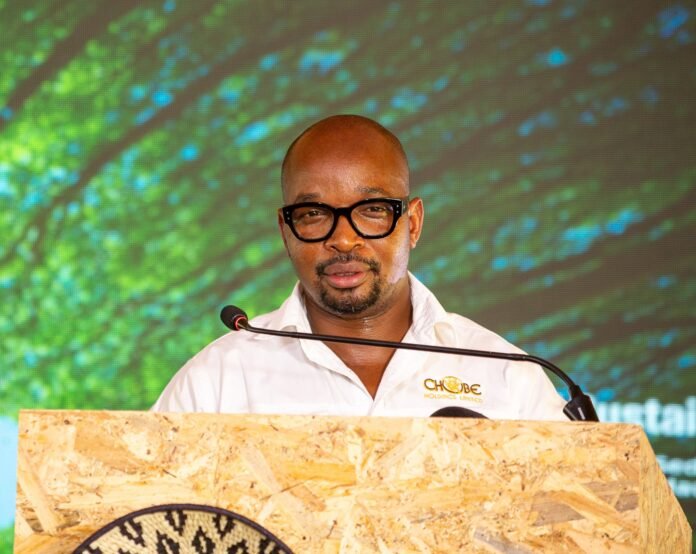
Presenting at Botswana Sustainability Week in Maun recently, Group Managing Director Lempheditse Odumetse said conservation was central to the long-term sustainability of the tourism industry, arguing that protecting wildlife and natural landscapes was essential to preserving the country’s tourism appeal.
“Conservation is not a cost of doing business; it is an investment in the future of tourism,” Odumetse said.
Odumetse also referenced declining human-wildlife conflict incidents in the area, indicating positive progress in efforts to promote coexistence. Chobe Holdings is also collaborating with the Okavango Research Institute on research and the digitisation of indigenous knowledge, alongside support for the University of Botswana’s Peter Smith University Herbarium to preserve ecological information for future generations.
The investment, channeled through Chobe Impact, the group’s conservation and social investment vehicle established in 2024, supports wildlife research, ecological data preservation, human-wildlife coexistence and the protection of cultural heritage. Among the initiatives supported is a partnership involving the Wildlife Conservation Research Unit at the University of Oxford (WildCRU), focused on maintaining wildlife fences in Makgadikgadi National Park.
The fences separate communal farmland from national park habitat, helping to manage interactions between wildlife and surrounding communities.
Odumetse also referenced declining human-wildlife conflict incidents in the area, indicating positive progress in efforts to promote coexistence. Chobe Holdings is also collaborating with the Okavango Research Institute on research and the digitisation of indigenous knowledge, alongside support for the University of Botswana’s Peter Smith University Herbarium to preserve ecological information for future generations.
The group has further invested in cultural heritage through the refurbishment of Nhabe Museum, with more than P856,000 committed to the project.
The museum was officially relaunched by Batawana Paramount Chief Kgosi Tawana Moremi and is positioned as a cultural attraction along the Okavango Delta tourism circuit. In the Chobe region, the company has funded artefacts and display cabinets for Kavimba Museum, which is scheduled to open formally, providing a permanent home for Subiya cultural heritage.
Odumetse said Chobe Holdings’ approach linked conservation with the economic value generated by tourism, particularly in destinations whose appeal depends on intact wilderness and healthy ecosystems.
“Conservation integrity is an operating philosophy,” the company’s presentation stated, highlighting its approach to limiting guest numbers and protecting sensitive environments. The group operates within the Kavango-Zambezi Transfrontier Conservation Area, which spans approximately 520,000 square kilometres across five countries. Its tourism operations also depend on natural assets such as the Okavango Delta and Chobe National Park.
He called for greater collaboration in conservation investment across the Kavango-Zambezi corridor and other protected landscapes, as well as stronger partnerships between the private sector, government and communities.
Beyond research and heritage, Chobe Holdings is investing in reducing the environmental impact of its operations. Thirteen lodges use solar energy, while solar geysers provide up to 25,000 litres of hot water daily. All lodges use reverse osmosis for drinking water, and organic waste is composted on site. The company is also introducing lower-emission tourism experiences, including electric safari vehicles and electric boats at Chobe Game Lodge.
Odumetse said the long-term future of tourism required coordinated conservation efforts involving businesses, government, communities and other stakeholders.
“No single organisation can secure the future of Botswana’s tourism industry alone -sustainable success requires shared responsibility and shared commitment,” he said.
He called for greater collaboration in conservation investment across the Kavango-Zambezi corridor and other protected landscapes, as well as stronger partnerships between the private sector, government and communities.
Chobe Holdings said its sustainability strategy seeks to ensure that tourism generates lasting economic and social value while safeguarding the wildlife, ecosystems and cultural heritage on which the industry depends.


