
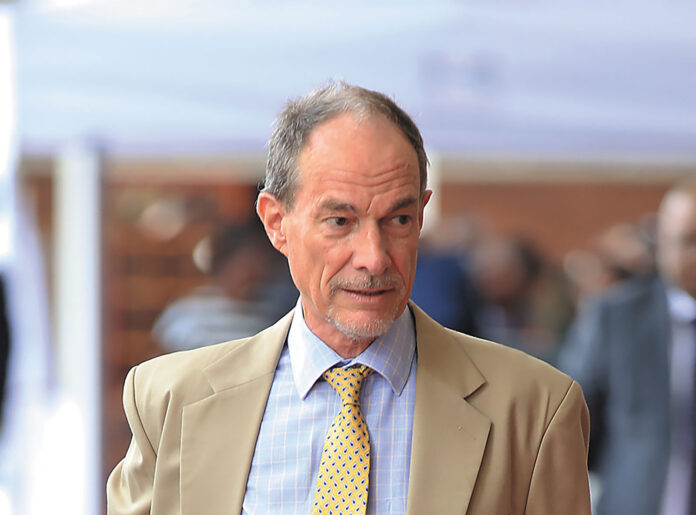


Econsult has applauded progress under Botswana’s Economic Transformation Programme (BETP), noting growing momentum in reforms aimed at unlocking investment and advancing key projects towards implementation.
In its third-quarter economic review, Econsult, led by Dr Keith Jefferis, points to expectations that “some of the BETP projects will soon reach bankability and move towards implementation”.
However, Econsult review has strongly suggested that BETP must “aggressively address barriers to private-sector growth, including over-regulation, restrictive immigration and labour policies, trade restrictions, and dysfunctional land systems.” The World Bank’s Botswana Economic Update recently made a similar case, as it identified private-sector development, skills, infrastructure and public-sector effectiveness as essential to a diversified economy.
For an economy seeking to reduce its dependence on diamonds and put private enterprise at the centre of growth, BETP reforms seem to be offering fresh hope for Botswana’s economic recovery.
At the BETP mid-term review in September, the Ministry of Finance reported that the programme had moved “from strategy to structural enhancements and legislative reforms”. Officials said land constraints had been addressed, including the issuing of 82 land titles for the Special Economic Zone.
The programme has identified 186 projects, 60 per cent private-sector-led. The African Development Bank approved US$503.75 million in October to support reforms intended to increase private investment, expand support for small businesses and create jobs. These developments further give substance to Econsult’s optimism.
On the fiscal front, Dr Jefferis expects tight restrictions on spending to continue. While this causes problems for some segments of the economy, he suggests they are in the medium-term fiscal stabilisation essential and will help to reduce pressure on interest rates and prevent unsustainable increase in government borrowing. Econsult
Meanwhile, Econsult also forecasts growth of 3.3 per cent in 2026, the strongest performance since 2022. Dr Jefferis, adds that, “this will be mainly driven by increased diamond production from Debswana, where output was up 14 percent over the first three quarters of the year.
There will also be a small uplift from technical revisions to data on copper production, due to be published in the third quarter.” The main drag on growth he said, will be from the livestock and beef cluster, which has been badly hit by FMD-related restrictions. He economist further highlighted that, the impact of foot-and-mouth disease restrictions on livestock and beef businesses, as well as the estimated 100,000 households that earn some income from livestock activities. This loss risks deepening pressure in rural communities and related supply chains.
“With no income from cattle and beef sales, goats and sheep, while meeting ongoing feeding and labour expenses, many farmers, traders and feedlot operators will struggle to survive commercially,” he added. On the fiscal front, Dr Jefferis expects tight restrictions on spending to continue. While this causes problems for some segments of the economy, he suggests they are in the medium-term fiscal stabilisation essential and will help to reduce pressure on interest rates and prevent unsustainable increase in government borrowing.
As the ratings agencies have pointed out, if the recent trajectory of rising debt and interest rates is continued, government’s interest payments on debt could reach over 10 percent of fiscal revenues by 2029, which would restrict funding even further for critical areas of government spending such as healthcare and education. He said pressure on the budget will remain, for instance, on the unfunded policy initiatives like the proposed National Health Insurance scheme.
Further tough choices regarding the level and composition of government spending cannot be avoided. And of course high public debt and rising debt service costs are not exclusive to Botswana – as the IMF has pointed out in its most recent World Economic Outlook, many governments are accumulating debt at an unsustainable pace, pushing up interest rates around the world.
The World Bank has called for stronger non-mineral revenue and tighter control of recurrent spending.


