
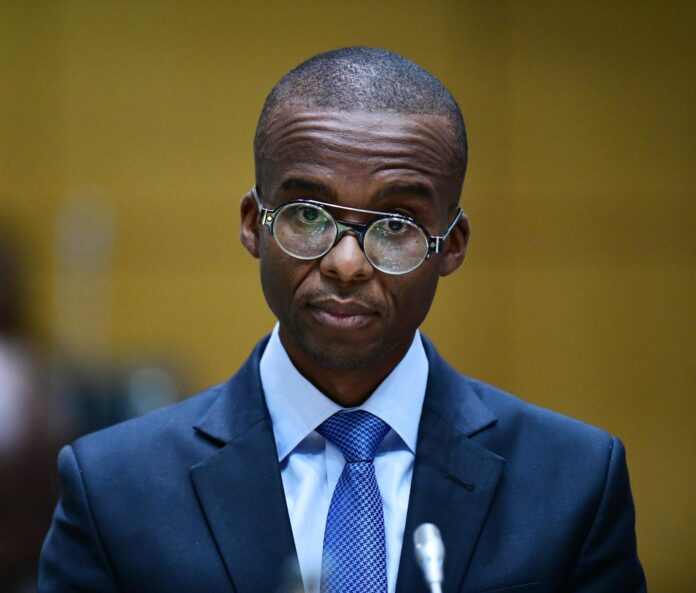

The government’s growing backlog of unpaid invoices has revealed a less visible problem than the cash shortage itself. The government does not always know how much tax it should be collecting from its own spending.
During a parliamentary question and answer session with Arafat Khan, MP for Molepolole North, Finance Minister Ndaba Gaolathe disclosed that the government cannot accurately state how much value-added tax (VAT) is tied to outstanding supplier payments, nor how much of that tax has actually been remitted to the treasury. The admission shows weaknesses in the link between public expenditure and tax administration at a time when the government is trying to squeeze more revenue from a slowing economy.
VAT is one of Botswana’s most important non-mineral revenue sources, charged at a standard rate of 14% on most goods and services. Lately the government has leaned increasingly on domestic taxes such as VAT and income tax to offset weaker diamond revenues, but gains have been uneven and insufficient to close the fiscal gap.
Gaolathe told parliament that supplier payments are often made on a VAT-inclusive basis, leaving it to contractors to remit the tax to the authorities. Because some suppliers are not VAT-registered and others provide exempt goods or services, the ministry cannot easily calculate the tax component of unpaid invoices. Nor can it say with confidence how much VAT has been collected from government-related transactions.

The gap matters more than it might appear. VAT is one of Botswana’s most important non-mineral revenue sources, charged at a standard rate of 14% on most goods and services.
Lately the government has leaned increasingly on domestic taxes such as VAT and income tax to offset weaker diamond revenues, but gains have been uneven and insufficient to close the fiscal gap.
The minister acknowledged that the current system makes it difficult for the Botswana Unified Revenue Service (BURS) to verify tax compliance linked to government contracts. In practice, the revenue authority must occasionally request payment data from the finance ministry, rather than accessing it automatically. That lack of integration, he said, prevents “real-time data on expected VAT from government related transactions”.
The push for tighter monitoring comes as the government faces mounting fiscal pressure. In the same parliamentary response, Gaolathe revealed that payment instructions worth more than P3.6 billion were outstanding to over 6,000 suppliers, with additional invoices still sitting inside ministries waiting to be processed.
To fix the problem, the Ministry plans to link its payment systems with tax administration platforms, allowing BURS to track transactions as they occur. The reform would form part of a bigger digital overhaul of the tax framework, including electronic invoicing and integrated tax administration systems intended to strengthen compliance and reduce leakages.
The push for tighter monitoring comes as the government faces mounting fiscal pressure. In the same parliamentary response, Gaolathe revealed that payment instructions worth more than P3.6 billion were outstanding to over 6,000 suppliers, with additional invoices still sitting inside ministries waiting to be processed. Cash-flow constraints, he said, have forced the government to prioritise payments based on available balances rather than the usual first-in-first-out rule.
Such delays do not only strain contractors; they also complicate tax collection. When invoices are unpaid or poorly tracked, the government cannot easily forecast how much VAT should flow back to the state, undermining revenue planning at precisely the moment when it is most needed.


