
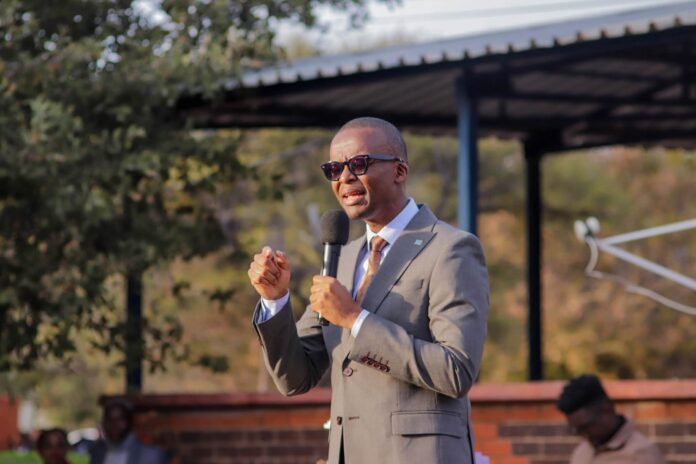


The government’s push to revive a strained economy and attract new sources of investment appears to be taking a broader international turn. This follows a recent trip to the United Kingdom recently by Vice-President and Minister of Finance Ndaba Gaolathe where he held talks with key officials at the Commonwealth for support as government increasingly relies on borrowing to finance its budget deficit.
The latest development follows a meeting between Gaolathe and Commonwealth Secretary-General Shirley Botchwey, who said the two discussed Botswana’s development plans, economic diversification ambitions and ways in which the Commonwealth can help unlock investment and promote sustainable economic growth.
Botchwey disclosed the meeting on X last week, describing Botswana as a “treasured member” of the Commonwealth family.“I was honoured to meet with His Excellency Ndaba_Gaolathe, Vice-President and Minister of Finance of Botswana,” Botchwey said.
She said their discussions centered on Botswana’s recent national development plan, economic and diversification ambitions, and how the Commonwealth Secretariat could support efforts to unlock “new opportunities for investment and sustainable economic growth.”
Gaolathe has also asked Parliament to approve an increase in the ceiling of the Government Bond Issuance Programme from P55 billion to P85 billion, a P30 billion jump that indicates the scale of financing pressure confronting the government.
The move comes at a critical time for the government which is simultaneously looking abroad for investment while turning increasingly to debt markets and commercial lenders to plug holes in its finances.
On August 20, Gaolathe presented two loan authorisation Bills before Parliament, both aimed at financing the 2026/2027 budget deficit. The first, the Syndicated Loan Facility (Loan Authorisation) Bill, 2026, seeks parliamentary authorisation for government to borrow from three local commercial banks-ABSA Bank Botswana, First National Bank Botswana and Stanbic Bank Botswana. The second, the Governance and Economic Resilience Support Programme (OPEC Fund for International Development) (Loan Authorisation) Bill, seeks authorisation for another loan from the OPEC Fund for International Development, also to finance the deficit.
Gaolathe has also asked Parliament to approve an increase in the ceiling of the Government Bond Issuance Programme from P55 billion to P85 billion, a P30 billion jump that indicates the scale of financing pressure confronting the government.
The developments raise questions over how Botswana intends to balance increased borrowing with its ambitions to restore economic resilience, diversify away from diamonds and create sustainable growth. The Commonwealth engagement therefore comes against a backdrop of increasing pressure on government to find fresh capital, attract private investment and broaden the productive base of the economy.


