

For decades, Botswana has searched for the next sport capable of matching the international impact of its athletics success. Now, basketball is making its pitch.
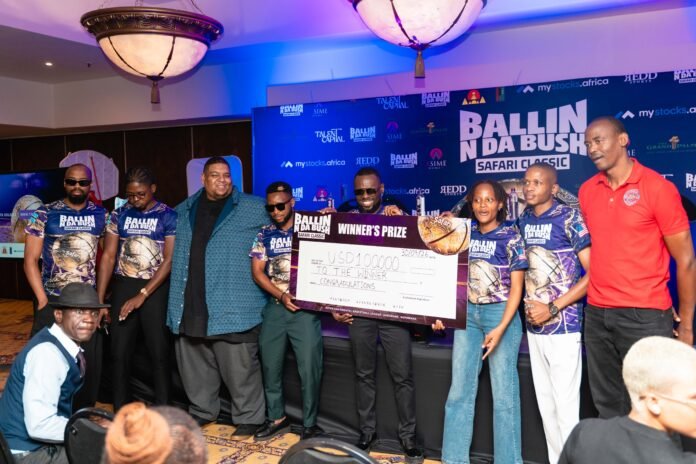
The launch of the Ballin N Da Bush Safari Classic on Tuesday signalled Botswana’s most ambitious attempt yet to establish itself as a destination for elite international basketball, with organisers promising not only a high-profile tournament but a long-term investment in player development, sports tourism and the commercialisation of local talent.
Set for September 28-30 at the University of Botswana Indoor Sports Arena, the tournament will bring together clubs from Africa and Europe to compete for a US$100,000 (approximately P1.3 million) prize purse, one of the largest currently on offer in African basketball. The event will be governed by the International Basketball Union (IBU) and is supported by Talent Capital, Bridge Elite Global and MyStocks.Africa.
The ambitions behind the tournament stretch far beyond three days of basketball.
“We are not just hosting a tournament; we are building an ecosystem that will commercialise local talent and create scalable economic infrastructure through sports,” Talent Capital Chief Executive Officer Mooketsi T.M.J. Morolong said at the launch.
The country has produced talented players over the years but has often lacked structured pathways into higher levels of competition. The proposed academy aims to address that gap by creating a clearer route from local courts to international opportunities.
That word — ecosystem — surfaced repeatedly throughout the launch and reveals the broader strategy at play. For organisers, the Safari Classic is designed as a platform that can connect Botswana’s players to international opportunities while simultaneously attracting teams, scouts, investors and sponsors to the country. It is a model increasingly being pursued across Africa, where sport is viewed not only as competition but as an economic development tool.
The tournament’s roots can be traced back to an invitational qualifying competition held last October at the SSKB Basketball Courts. Unlike traditional qualification systems, participation was strictly by invitation, with organisers handpicking clubs from across several countries. The top three teams from that event earned their place in this year’s showcase tournament.
Among those involved in the qualification process were Botswana clubs BDF V, Broadhurst Aspire and UB Relics, alongside international sides from South Africa, Mozambique, France, Rwanda, Burkina Faso and Côte d’Ivoire.
Morolong defended the invitation-only model as a way of guaranteeing quality.
“The invitational qualifiers allowed us to identify the highest-performing teams and assemble a competition that reflects the quality and standard we want the Safari Classic to be known for,” he said.
The tournament’s organisers are also hoping to leave a lasting legacy beyond the final buzzer. Former NBA players Earl Barron and Devin Green are expected to lead elite youth clinics during the event, providing local players with access to coaching and mentorship rarely available in Botswana. Organisers have also outlined plans to establish a permanent Basketball Academy that would identify promising athletes and help connect them with prep schools, colleges and professional clubs abroad.
“This is bigger than a single tournament,” Morolong said. “We are creating a platform that gives African talent global exposure, attracts investment into sport and establishes Botswana as a home for world-class basketball.”
For Botswana’s basketball community, that may prove more significant than the prize money itself.
The country has produced talented players over the years but has often lacked structured pathways into higher levels of competition. The proposed academy aims to address that gap by creating a clearer route from local courts to international opportunities.
There is also an economic argument behind the project.
Organisers believe the Safari Classic can become a catalyst for sports tourism, drawing visiting teams, supporters, scouts and investors into Botswana.
The anticipated influx of visitors would benefit hotels, restaurants, transport operators and other businesses while helping position the country as a venue capable of hosting major sporting events.
“This is bigger than a single tournament,” Morolong said. “We are creating a platform that gives African talent global exposure, attracts investment into sport and establishes Botswana as a home for world-class basketball.”
Whether the Safari Classic can fulfil those ambitions remains to be seen. But as Botswana continues to look for new ways to diversify its sporting economy and create opportunities for young athletes, the tournament represents a bold statement of intent. The games will tip off in September.


