
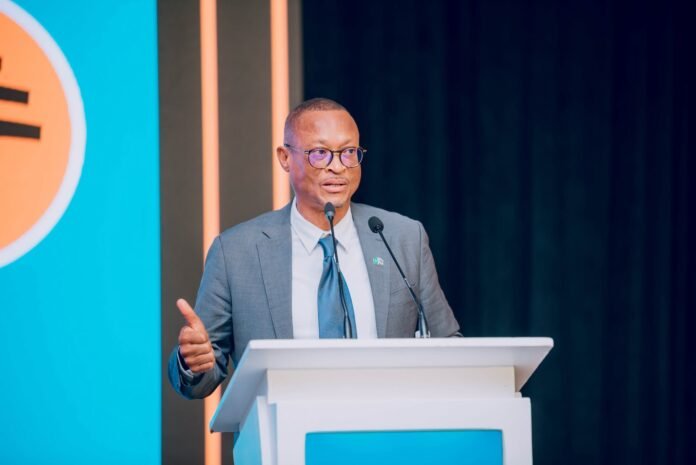


In a year marked by sluggish credit growth, global uncertainty and persistent pressure on households and businesses, FNB Botswana has delivered a landmark financial performance. The bank posted more than P2 billion in annual pre-tax profit.
The bank reported profit before tax of P2.1 billion for the year ended June 30, 2026, a 12% increase from P1.9 billion the previous year. This is an indication of the resilience of Botswana’s largest listed lender at a time when many sectors of the economy continue to experience weak growth.

The result was driven less by traditional lending and more by the bank’s growing ability to generate revenue from transactions, digital services and other non-interest activities. Non-interest revenue surged by 30% to P2.3 billion, while customer deposits rose 7% to P28.3 billion, reflecting continued confidence in the institution.
The results come as FNB Botswana marks its 35th anniversary and intensifies its focus on its “Shared Prosperity” agenda, which management says is now embedded throughout the organisation.
Yet the numbers also reveal the realities of the operating environment. Gross advances to customers declined by 4% to P20.6 billion, suggesting subdued demand for credit or a more cautious lending stance. Meanwhile, the credit loss ratio rose sharply to 0.89% from 0.34%, indicating increased impairments as some borrowers came under pressure.
Still, the bank maintained enviable profitability metrics. Return on equity stood at 33.2%, while the cost-to-income ratio improved to 45.4%, highlighting strong operational efficiency. Shareholders were rewarded with a final dividend of 30 thebe per share, double the previous year’s payout.
Acting Chief Financial Officer Orapeleng Senwelo said the performance reflected a careful balancing act between growth and prudence.
“Shared Prosperity is no longer a standalone pillar of our strategy; it is embedded in how we operate. Every division, every branch and every team must be conscious of the impact we create for our clients, communities and the environment,” Bogatsu said.
“Despite a challenging operating environment, we remained focused on supporting our clients’ funding and wider banking needs, while maintaining a disciplined approach to risk and performance. This balance enabled us to deliver resilient results,” he said.
The results come as FNB Botswana marks its 35th anniversary and intensifies its focus on its “Shared Prosperity” agenda, which management says is now embedded throughout the organisation.
Chief Executive Officer Steven Bogatsu said the concept had evolved beyond a strategic pillar into an operating philosophy.

“Shared Prosperity is no longer a standalone pillar of our strategy; it is embedded in how we operate. Every division, every branch and every team must be conscious of the impact we create for our clients, communities and the environment,” Bogatsu said.
The emphasis shows a trend in African banking, where institutions are increasingly expected to balance profitability with social and environmental impact. At FNB Botswana, this includes sustainable finance initiatives, community investments through the FNB Botswana Foundation and efforts to lower the cost of banking through free local card transactions, airtime purchases and electricity purchases.
Looking ahead, the bank’s economist, Gomolemo Basele, pointed to a global economy still going through geopolitical tensions, inflation and shifting market dynamics. However, he argued that opportunities remain for Botswana in manufacturing, financial services and digitalisation, provided structural reforms and skills development continue.


