
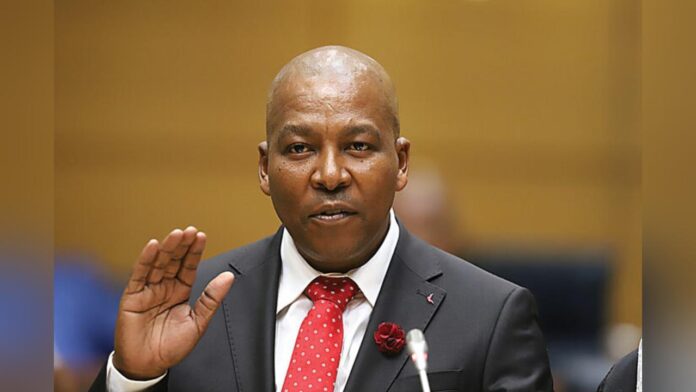


The Directorate of Public Prosecutions (DPP) has appealed the acquittal of former Minister of Mineral Resources and Energy Lefoko Moagi in a P4.7 million corruption case. DPP is set to challenge a ruling by Broadhurst Regional Magistrate Mareledi Dipate that the prosecution had failed to establish a case requiring him to answer.
The appeal follows Dipate’s judgment delivered on October 29, 2026, in which he acquitted and discharged Moagi after upholding a no-case-to-answer submission by the defence.
In a statement, the DPP said it had decided to challenge the ruling after conducting a comprehensive review of the judgment and the court record.
“The DPP has determined that the Learned Magistrate erred in his interpretation and application of applicable principles of law,” the prosecution authority said.
The DPP confirmed that Moagi and his attorney had been served with the appeal papers.
The case centred on allegations that Moagi received P4,706,000 from New Energy Company (Pty) Ltd through Wise Creatives Investments (Pty) Ltd, allegedly as a reward for facilitating the award of prospecting licences for base metals in Ghanzi, Tsabong and Tutume districts. According to the prosecution, the money was channelled through Wise Creatives, an entity linked to New Energy and Riders (Pty) Ltd. Moagi was allegedly given a Bank Gaborone card through which he could access the funds. Investigators told the court that approximately P1.8 million had been spent using the card.
However, in acquitting Moagi, Dipate found that the State had not established sufficient evidence to require him to enter his defence. The magistrate noted that the prosecution had failed to call the alleged company directors to testify. He also questioned how the State had demonstrated that Moagi personally influenced the award of the eight prospecting licences, particularly given evidence that the due diligence processes had been conducted elsewhere. Dipate further emphasised that an accused person was under no obligation to produce evidence in his own defence, placing the burden of proving the charge squarely on the prosecution.


