


Botswana’s fiscal problem is often misdiagnosed. It is not yet a debt crisis, nor is it an immediate liquidity crunch. It is, instead, a slow-burning exhaustion of buffers built during decades of diamond prosperity. The 2026 Budget Speech makes this clear, even if unintentionally: the country’s room for manoeuvre has narrowed dramatically, forcing a sharp reassessment of how the state spends, saves and intervenes in the economy.
At the centre of the problem is the collapse of financial cushions that once insulated Botswana from shocks. As of November 2025, the Government Investment Account stood at P2.91 billion, a steep fall from the P37.2 billion recorded in 2014. Over the same period, net financial assets have swung decisively into negative territory, declining from a surplus equivalent to about 40 percent of GDP in 2008 to a deficit exceeding 30 percent by 2024.
These buffers were not merely accounting conveniences. They were the backbone of Botswana’s reputation for prudence, allowing governments to smooth spending during downturns without resorting to abrupt cuts or heavy borrowing. Their erosion explains the severity and urgency of the measures announced in the latest budget.
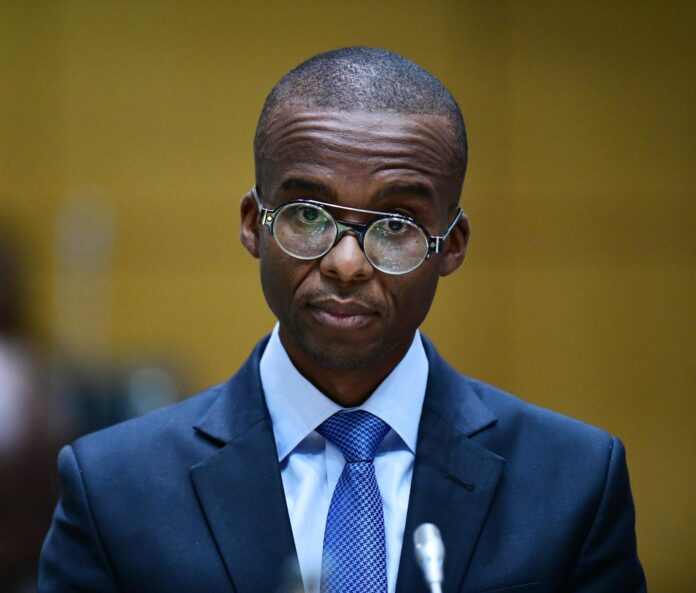
“The persistent fiscal deficits experienced in recent years have significantly weakened the country’s fiscal buffers,” Finance Minister Ndaba Gaolathe told Parliament in his 2026 Budget Speech, warning that the trajectory was “increasingly unsustainable and poses mounting risks to macroeconomic stability.”
“Fiscal consolidation is unavoidable,” Gaolathe said, stressing that restoring sustainability would require “decisive expenditure rationalisation, improved efficiency, and strengthened revenue mobilisation.”
The deterioration has multiple causes. Diamond revenues have declined, expenditure commitments have expanded, and weaknesses in public financial management have allowed obligations to accumulate faster than resources. Over time, deficits that were once manageable became structural. The result is a state that now has limited capacity to respond to shocks through spending.
This reality has forced a strategic shift. Rather than attempting to stimulate growth through higher public expenditure, the government has chosen restraint. Procurement has been centralised, supplementary budgets eliminated, travel curtailed and non-essential spending cut. These are not ideological choices; they are imposed by arithmetic.
Without buffers, every additional pula of spending must be financed either through borrowing or by drawing down reserves that no longer exist. Borrowing, meanwhile, comes with its own constraints. Although Botswana’s debt levels remain moderate, debt servicing costs are rising, and the budget speech is clear that unchecked borrowing would only postpone, rather than resolve, the underlying problem.
“Fiscal consolidation is unavoidable,” Gaolathe said, stressing that restoring sustainability would require “decisive expenditure rationalisation, improved efficiency, and strengthened revenue mobilisation.”
The government’s ambition is not merely to stabilise the present, but to rebuild buffers over time. That will require sustained discipline, credible reforms to state-owned enterprises, and a reorientation of the economy toward private-sector-led growth. It will also require political resolve, as restraint is rarely popular in a society long accustomed to state-driven development.
The country’s predicament is therefore paradoxical. It remains richer, more stable and better governed than many of its peers, yet its margin for error has narrowed sharply. The 2026 budget makes plain that the era of effortless cushioning is over.


