
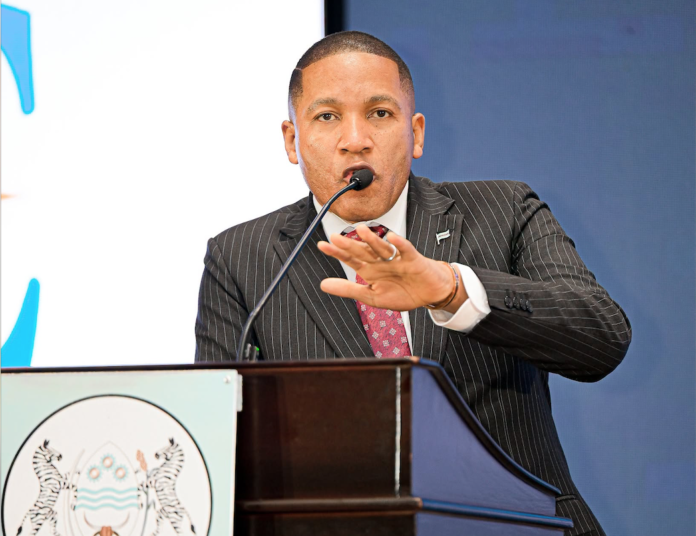

The international spotlight is turning towards President Duma Boko’s relationship with the media. International organisations have expressed concern that Boko’s public criticism of journalists and alleged attempts to control public discourse could undermine freedom of expression and democratic accountability.
A new assessment by EU SEE, an umbrella organisation bringing together civil society organisations and NGOs in Botswana and financially funded by the European Union has taken the lead in raising concerns about what it describes as growing pressure on independent journalism under the new administration.
The organisation questions the contradiction between the government’s human rights-oriented posture and developments that could narrow the space for independent media and civil society.
It states that: “Concerns have emerged regarding the broader environment for freedom of expression.”
It further notes that; “Public statements by President Duma Boko questioning the credibility of the media, reports of restrictive engagements between government leaders and journalists, and allegations of efforts to manage public discussion around constitutional reform” as developments that have raised concerns about pressure on independent journalism.
The assessment also highlights the temporary removal of journalist Letumile Montsosa from a radio programme, reportedly linked to coverage of the constitutional review process, as another troubling development. It states that the incident “further heightened concerns about media independence and the ability of citizens to freely engage in public debate.”
“Concerns regarding media independence and freedom of expression may further affect civic participation and public accountability,” states the organisation. The proposed Media Bill, 2025, gazetted in December 2025, has emerged as another major source of concern.
According to EU SEE, the concerns come against the backdrop of the government’s constitutional reform agenda, which has increasingly attracted scrutiny from civil society organisations and other democratic accountability institutions. EU SEE warns that the deterioration of media independence could have consequences beyond the newsroom, particularly for citizens seeking to participate in national debates and hold public institutions accountable. “Concerns regarding media independence and freedom of expression may further affect civic participation and public accountability,” states the organisation. The proposed Media Bill, 2025, gazetted in December 2025, has emerged as another major source of concern.
While the legislation seeks to modernise the media regulatory framework and promote professionalism in the sector, media stakeholders and civil society organisations fear that some of its provisions could give the state excessive influence over the media. According to EU SEE, concerns have been raised that certain provisions “may increase state oversight of the media, undermine editorial independence, and potentially restrict press freedom.”
It says civil society organisations are consequently advocating for a regulatory framework that respects democratic principles and international human rights standards while protecting freedom of expression, access to information and independent journalism.
The report also reveals growing tensions between government and civil society organisations, particularly over the proposed Constitutional Court Bill and the constitutional review process.
It notes that some government officials have publicly criticised positions taken by CSOs, portraying them as politically motivated or oppositional rather than recognising their contribution to democratic dialogue and accountability.
The assessment observes that; “These tensions have reinforced perceptions of a contested civic space, especially for organisations engaged in policy advocacy and governance-related issues.” Beyond media freedom, EU SEE questions the government’s commitment to advancing the rights of marginalised groups, including women and LGBTQI+ persons. It states that although the new administration has positioned itself as human rights-oriented, “it has yet to adopt explicit policies or commitments that substantively advance the rights of marginalised groups in Botswana.”


