


Chobe Holdings Limited employs a workforce that is 98 percent citizen-based, with all its lodges managed by Batswana. The tourism group positions local employment and skills development at the centre of its sustainability strategy.
Group Managing Director Lempheditse Odumetse said the company’s approach went beyond creating jobs to building careers and developing local leadership in Botswana’s tourism industry.
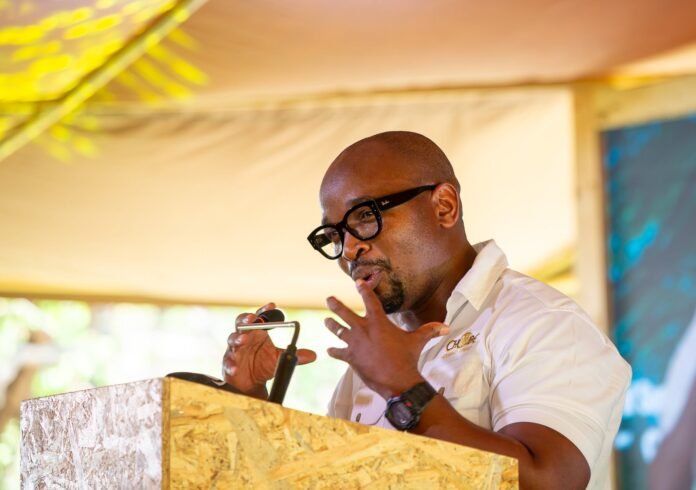
Presenting at Botswana Sustainability Week in Maun, Odumetse said tourism should provide lasting opportunities for citizens while ensuring that communities benefit from the country’s natural resources.
Odumetse’s own career reflects the group’s internal development model. He joined the business as a waiter at Camp Moremi in 1999 before rising to become managing director.
“Tourism should not only create employment; it should create futures,” he said.
Chobe Holdings employs 1,042 people and reported a staff retention rate of 96 percent, according to the presentation. The company invested P168 million in wages, salaries and benefits in the 2026 financial year.
Its employment strategy includes a phantom share scheme through which qualifying employees share equally in dividends equivalent to three million company shares, regardless of seniority. The initiative is intended to foster an ownership culture across the organisation.
Odumetse’s own career reflects the group’s internal development model. He joined the business as a waiter at Camp Moremi in 1999 before rising to become managing director.
The group is also investing in the next generation of tourism professionals through a vocational scholarship programme launched in 2023. The initiative enrols 10 young people from rural communities each year for training in hospitality and related skills. Of the 20 graduates produced by the programme to date, 15 are now employed by Chobe Holdings, demonstrating the company’s effort to connect skills development with employment opportunities.Beyond its workforce, the group is seeking to strengthen local entrepreneurship and community participation in tourism supply chains. Through the Maun Business Collective, Chobe Holdings provides cohort-based training in financial management, marketing, customer service and operational efficiency. A second cohort was undergoing training at the time of the presentation. The group has also supported community enterprises, including a fresh-produce initiative in Muchenje Village, where a borehole was installed to strengthen supplies to Chobe Game Lodge.
The project aims to support local producers while reducing the environmental cost of sourcing food from more distant suppliers. Other initiatives include a poultry project in Khumaga and a women’s glass project focused on skills development, product quality and access to tourism markets.
Chobe Holdings reported community investment exceeding P9 million in the 2026 financial year, alongside P4.02 million in education investment through its social investment vehicle, Chobe Impact.
Odumetse said local participation was critical to ensuring that tourism generated broader economic benefits rather than concentrating value within operators. “Tourism succeeds when communities are not spectators, but partners and beneficiaries,” he said.
For Chobe Holdings, the figures on citizen employment form part of a wider sustainability approach that links commercial performance with workforce development, conservation and community investment.
He called for stronger support for citizen-owned tourism enterprises, deeper local supply-chain linkages and greater collaboration between government, businesses, non-governmental organisations and communities.
For Chobe Holdings, the figures on citizen employment form part of a wider sustainability approach that links commercial performance with workforce development, conservation and community investment.
The group operates 16 lodges and camps across Botswana, Namibia and Zambia and is Botswana’s only publicly listed eco-tourism company.
Odumetse said the long-term success of tourism depended on shared responsibility and a commitment to ensuring that the industry’s benefits extended beyond the visitor experience.


