
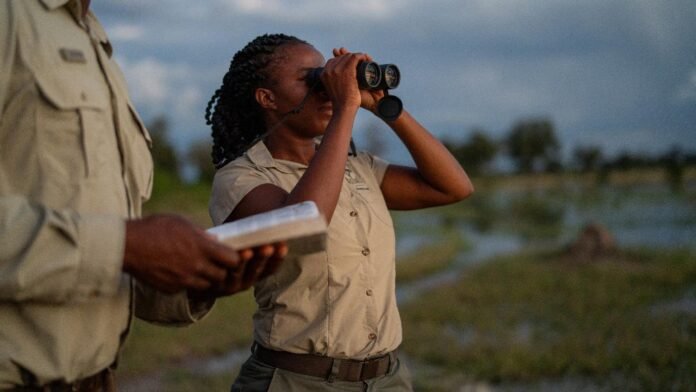

In the Okavango Delta, the wilderness is never quite separate from the people who live alongside it. The waterways that draw tourists from across the world are also part of the landscape in which communities raise children, make a living and imagine their futures.
It is this less visible side of Botswana’s tourism industry that African Bush Camps Foundation explores in Connected Landscapes, Thriving Communities, a new film documenting years of community development work in Ditshiping, a remote village in the Delta.
Made against the backdrop of a tourism economy built largely around the appeal of pristine wilderness, the film asks a question that extends beyond the usual conservation narrative: what happens when the benefits of tourism reach the people who call these landscapes home?
In the case of Ditshiping, the answer is found not in a single intervention but in a series of initiatives spanning education, healthcare, food security, livelihoods and conservation. Working with the community through its partnership with Atzaró Okavango Camp, the Foundation has sought to support priorities identified locally, rather than arrive with solutions devised elsewhere.
The Foundation’s approach rests on the idea that development is more likely to endure when communities help determine what they need and how those needs should be met. In Ditshiping, that has meant investing in practical foundations for a more secure future, from access to education and healthcare to food production, employment and skills development.
In communities living alongside some of Africa’s most celebrated wildlife destinations, the promise of tourism is often discussed in terms of visitor numbers, luxury camps and the economic value of wilderness. Less visible is the question of how that value translates into better opportunities for people beyond the gates of the lodges.
The Foundation’s approach rests on the idea that development is more likely to endure when communities help determine what they need and how those needs should be met. In Ditshiping, that has meant investing in practical foundations for a more secure future, from access to education and healthcare to food production, employment and skills development.
The film brings these connections into focus through the experiences of people in the village, presenting community development not as an isolated charitable exercise but as part of a wider relationship between tourism, conservation and local livelihoods.
One of the clearest expressions of that relationship is Ditshiping Pre-School, recently rehabilitated through a partnership between African Bush Camps Foundation and Dulini Daunara.
The work has transformed the facility into a safer, functioning learning environment, with improvements to its solar power, water and electrical systems, as well as its grounds, playground and learning facilities. In August 2026, the school welcomed its first class of learners.
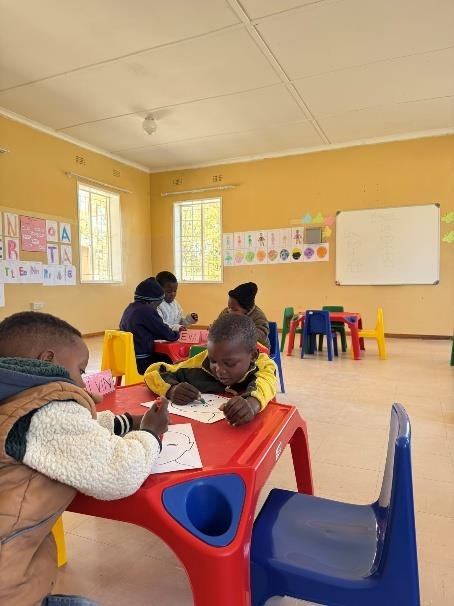
For a village whose future is bound up with the health of the surrounding landscape, the pre-school offers a reminder that sustainability is not only about protecting wildlife corridors or preserving the natural environment. It is also about the conditions in which the next generation grows up, learns and begins to imagine what is possible.
Yet a renovated building is only the beginning. The Foundation is now concentrating on the less glamorous, but equally important, work of keeping the school running: sustaining its daily feeding scheme, supporting teachers and other staff, and meeting the costs of maintenance, cleaning, repairs and connectivity.
It is a reminder of a familiar challenge in community development. The difference between delivering a project and sustaining a service. Infrastructure may provide the starting point, but its long-term value depends on the people, resources and systems that keep it functioning. Ditshiping’s story also speaks to a broader debate about the place of local communities in conservation. Responsible tourism increasingly presents itself as a means of protecting nature while supporting livelihoods, but the relationship is not automatic. Its value depends, in part, on whether communities can access meaningful opportunities and participate in shaping the future of the places they inhabit.
Through employment, skills development, food production and education, tourism can create connections between visitors, businesses and residents that extend beyond the conventional guest experience. The challenge is ensuring those connections translate into benefits that last beyond a guest’s stay. The film arrives in a year marked by two milestones for African Bush Camps Foundation: Botswana’s 60th anniversary of independence and the Foundation’s 20 years of work across Botswana, Zambia and Zimbabwe.
Since 2006, the Foundation has partnered with African Bush Camps on initiatives ranging from education and the rehabilitation of health facilities to support for female rangers and the protection of wildlife corridors. Its work is premised on the belief that thriving communities and healthy ecosystems need not be competing ambitions.
In the Delta, where the language of conservation often begins with the extraordinary richness of the natural world, Ditshiping offers a different way of looking at what must be protected. The landscape is not only a destination to be experienced or a habitat to be preserved. It is also home.
Connected Landscapes, Thriving Communities brings that belief into a distinctly local setting. Rather than measuring progress solely through what has been built, it turns attention to the relationships and continuing commitments that give such projects their meaning.
The Foundation is inviting supporters to contribute towards the ongoing needs of Ditshiping Pre-School, helping sustain the learning environment now available to the village’s children.
In the Delta, where the language of conservation often begins with the extraordinary richness of the natural world, Ditshiping offers a different way of looking at what must be protected. The landscape is not only a destination to be experienced or a habitat to be preserved. It is also home.
And if tourism is to claim a lasting role in conservation, its success may ultimately be judged not only by what remains wild, but by what becomes possible for the people who live there. Support the next chapter: African Bush Camps Foundation is inviting contributions towards the ongoing needs of Ditshiping Pre-School.
For further information, contact Natasha Van Zyl at natasha@africanbushcamps.com. Learn more at africanbushcampsfoundation.org.


