
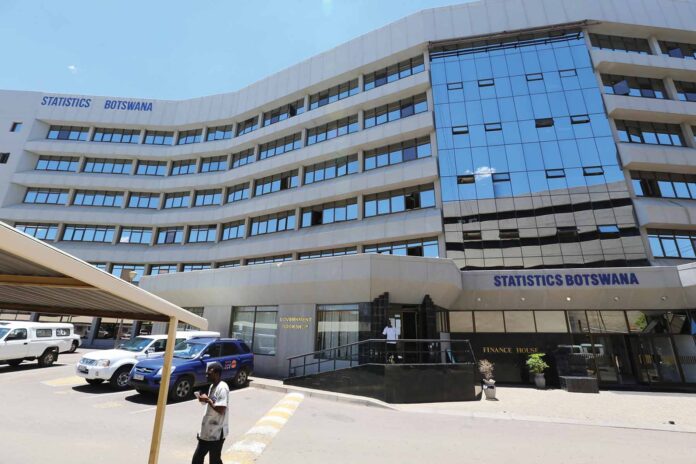


Vice President and Minister of Finance Ndaba Gaolathe has strongly urged Statistics Botswana to position information as a strategic economic asset, as the country drives its economic transformation.
Speaking at the launch of Statistics Botswana’s Corporate Strategic Plan 2026–2030, themed “From Data Producer to Data Leader” on Tuesday, Gaolathe said data presented an opportunity for Botswana to create new sources of economic value beyond its traditional reliance on diamonds.
“For Botswana, a country whose prosperity has long been associated with diamonds, data has the potential to become a new diamond, an asset from which we create value through knowledge, enterprise and innovation,” he said.
International experience demonstrates the economic potential of this opportunity. The United Kingdom estimates that investment in data reached £287–303 billion in 2024 (P5.29 trillion-P5.58 trillion), equivalent to approximately 11–12 percent of its gross value added.
Gaolathe described data as becoming the new infrastructure of the global economy, comparable to the roads and electricity that enabled industrial development in previous generations.
Meanwhile, the Organisation for Economic Co-operation and Development (OECD) estimates that improved access to and sharing of public- and private-sector data could generate economic and social benefits equivalent to 1–2.5 percent of GDP.
From the regional counterparts, Rwanda’s IremboGov digital government platform has digitised more than 100 government services, processing over 25 million applications and reducing average service delivery time from five days to 24 hours. Kenya’s Twiga Foods uses real-time market information to connect farmers and vendors, reducing inefficiencies in agricultural supply chains.
Gaolathe described data as becoming the new infrastructure of the global economy, comparable to the roads and electricity that enabled industrial development in previous generations.
The opportunity, he said, lies in moving beyond collecting statistics towards using information to develop businesses, improve productivity, create employment and strengthen public services.
He pointed to Airbnb and Uber as examples of how data-driven platforms have transformed established industries while creating economic opportunities.
Airbnb has reshaped hospitality by connecting hosts and travellers through digital information, while Uber has transformed mobility by connecting consumers with drivers and couriers.
“These platforms show how data can reshape accommodation, retail, mobility and delivery, while opening up income opportunities for millions,” he said.

For Botswana, he said unlocking this potential would require stronger digital infrastructure, reliable information systems, skilled professionals and appropriate data-governance frameworks.
Gaolathe said Statistics Botswana had an important role in strengthening the national statistical system through improved data quality, timely publication, innovation and greater coordination across institutions.
He emphasised that credible statistics were essential to informed policymaking, particularly as Government navigates fiscal pressures and competing national priorities.
“When resources are limited, the quality of our evidence becomes inseparable from the quality of our stewardship,” he said.
The Vice President also stressed that data must support accountability, enabling Government to distinguish between investment announced and investment realised, jobs projected and jobs created, and projects launched and economic value delivered.
With young people positioned at the forefront of digital innovation, Gaolathe said institutions such as the Botswana Digital and Innovation Hub, universities and technical colleges must help develop the skills needed to translate data capabilities into entrepreneurship and productive employment.


