

Government has not yet taken a firm position on whether to increase the statutory retirement age for public servants from 60 to 65 years as it says the issue will require careful study of labour market conditions and public service needs.
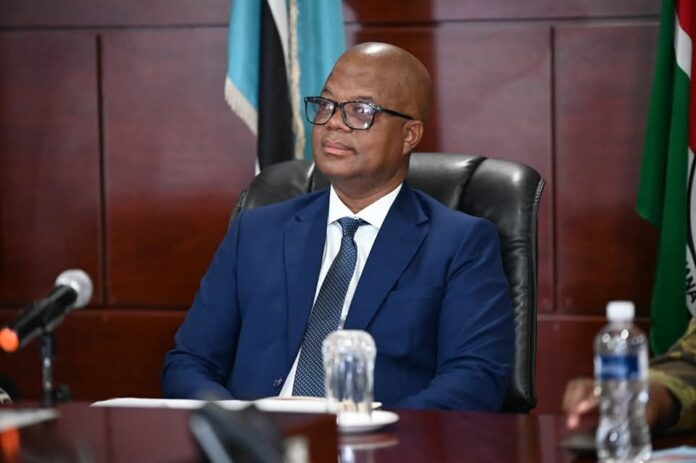
The matter was raised in Parliament on Monday when Mabuse Pule, Member of Parliament for Kgatleng East, asked the Minister for State President, Defence and Security Moeti Mowasa whether government intended to review the current retirement age to align it with that of judges and some other professions, which stands at 65.
Pule said such a move could promote longer economic participation and help address the five-year pension gap many workers face between retirement at 60 and the eligibility age for some pension benefits.
In response, the minister said current legislation sets the compulsory retirement age for public officers at 60 years, but allows for extensions where there is a demonstrated need for continued service.
“The current law provides that the compulsory retirement age of Public Officers is 60 years,” Mohwasa said. “It further provides that where there is a demonstrated need for the continued service, the appointment of Public Service officers beyond the age of 60 years may be considered.”
The minister indicated that while government has not ruled out a review, any decision to change the retirement age would depend on broader economic and labour considerations.
“It is worth noting that depending on several factors affecting the employment environment at a given time, review of the retirement age may be considered,” he said.
According to the minister, such considerations would require a detailed assessment of the labour market, including public service delivery requirements and employment trends.
“Issues to consider will, among others, include the need to balance the current graduate unemployment challenges with the critical desire to utilise the much-needed human resources available within the age bracket of retirement,” he said.
The government must also weigh competing priorities, including the need to create opportunities for young graduates entering the labour market.
“Considerations of this nature would be preceded by a careful analysis of the job market and public service delivery needs,” Mohwasa said.
He added that policymakers must balance the country’s rising graduate unemployment levels with the desire to retain experienced personnel in the public service.
“Issues to consider will, among others, include the need to balance the current graduate unemployment challenges with the critical desire to utilise the much-needed human resources available within the age bracket of retirement,” he said.
Proponents of raising the retirement age argue that longer life spans mean many workers remain productive well beyond 60 and that extending employment could help ease pressure on pension systems while allowing individuals to accumulate greater retirement savings.
Others, however, caution that increasing the retirement age could slow the entry of younger workers into the public service at a time when graduate unemployment remains a concern.
Currently, certain professions including members of the judiciary retire later than most public officers, creating differences in retirement ages across government institutions.
The government’s response suggests that while the issue remains under consideration, no immediate changes to the retirement age policy are planned.


