
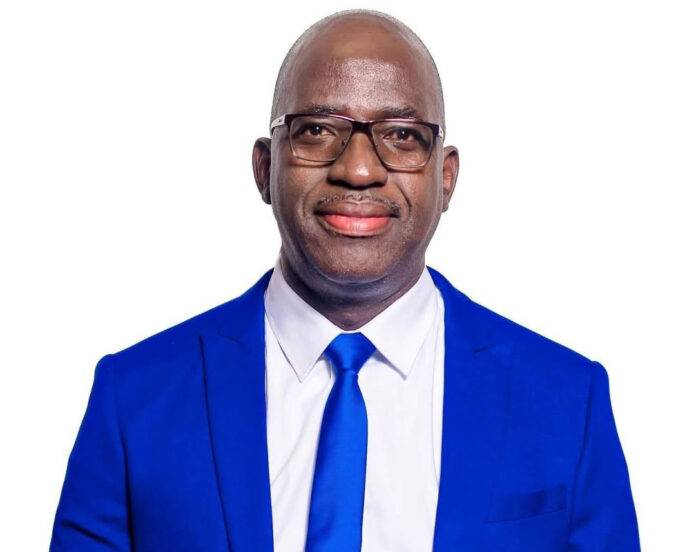

OKAVANGO WEST MP Kenny Kapinga has renewed calls for a judicial inquest into the fatal police shooting of 10 suspected robbers during a dramatic cash-in-transit heist in Gaborone’s Phase 2 industrial area four years ago, accusing successive governments of failing to ensure accountability.
The incident, which occurred on February 24, 2022, left 10 suspects dead and one survivor after security agents foiled what police described as a daring robbery in the capital. At the time, the police identified those killed as members of an armed gang targeting a cash-in-transit vehicle.
Marking the fourth anniversary of the shootings, Kapinga who is a former Police Commissioner and a lawyer by profession said the deaths raised serious legal and human rights questions that remain unanswered.
“Ten human beings were massacred in one day by people who have been referred to as security agents,” Kapinga said on his Facebook page. “Those deceased people were members of their families. They had mothers, fathers and siblings who want to know why their relatives were killed en masse in such a manner.”
He argued that Botswana’s laws require an inquest whenever a person dies under violent or unclear circumstances, to establish the cause of death and determine whether criminal liability exists.
“The new administration, which declares itself as a human rights-centric government, also seems to have no desire to ensure that the inquest is held,” Kapinga said. “It appears contradictory to advocate for the abolition of the death penalty, yet turn a blind eye to an incident that can qualify as an extra-judicial killing.”
“The laws of Botswana clearly provide that where a human being has died under such circumstances, an inquest hearing should be convened to inquire into the circumstances of the death,” he said.
Kapinga revealed that he had previously raised three parliamentary questions pressing the government to initiate an inquest, but without success.
“This incident occurred during the previous administration, which in my view was unwilling to enforce accountability in the agency suspected of carrying out the shooting,” he said. “I have had no positive response to date.”
He also criticised the current administration, which has positioned itself as human rights-focused, for failing to act on the matter.
“The new administration, which declares itself as a human rights-centric government, also seems to have no desire to ensure that the inquest is held,” Kapinga said. “It appears contradictory to advocate for the abolition of the death penalty, yet turn a blind eye to an incident that can qualify as an extra-judicial killing.”
Kapinga insisted his call was not intended to attack security agencies but to uphold constitutional accountability.
“I am not itching for a fight with any security agency or any person whatsoever. I am standing up, as it is my constitutional duty, to make the government accountable and for human life not to be treated as cheap, just because somebody was suspected of committing a crime,” he said.
He also expressed sympathy for the families of those killed.
“I take this time to once again express my sympathies to the relatives of those who were murdered and have hitherto been denied the justice of an inquest hearing,” Kapinga said.
The Phase 2 shootings remain one of the deadliest single-day police operations in Botswana’s recent history sparking public debate at the time over the use of lethal force by security agents.


