

The public health system was pushed to the brink during last year’s State of Public Health Emergency, with the availability of critical life-saving medicines dropping to just 17 percent at the height of the crisis, Minister of Health Steven Modise has revealed.
Responding to a parliamentary question from MP Kekgonegile Gobotswang, the minister said the emergency declared by President Duma Boko on 25 August 2025 followed a “catastrophic disruption” of the national medical supply chain that left hospitals and clinics struggling with severe shortages of essential medicines.
Gobotswang had asked the minister to update Parliament on the state of the emergency, including stock levels of essential medicines and antiretroviral drugs (ARVs), operational failures that occurred, and the corrective measures taken by government.
Modise told the Parliament that when the emergency was declared, the availability of highly critical medicines, including those needed for resuscitation and post-resuscitation care, had fallen to alarmingly low levels.
“At the start of the emergency period, the average availability for ARVs was 71 percent, and sustained deliveries contributed to an availability of 73 percent by the end of February 2026,” he said.
“At the onset of the emergency, availability of highly critical medicines had dropped to 17 percent,” he said.
Through emergency procurement, coordinated distribution and closer monitoring, the situation improved slightly to 32 percent by the end of the emergency period. The minister said the most significant recovery only came after supplies ordered during the emergency began arriving, pushing overall availability to 64 percent at health facilities.
The minister said government placed particular priority on antiretroviral drugs, given their importance in sustaining treatment for people living with HIV.
“At the start of the emergency period, the average availability for ARVs was 71 percent, and sustained deliveries contributed to an availability of 73 percent by the end of February 2026,” he said.

He added that Botswana has secured a 12-month supply of all ARV regimens through international suppliers and multilateral partners, while similar arrangements have been made for medicines used to treat cancer and other chronic illnesses.
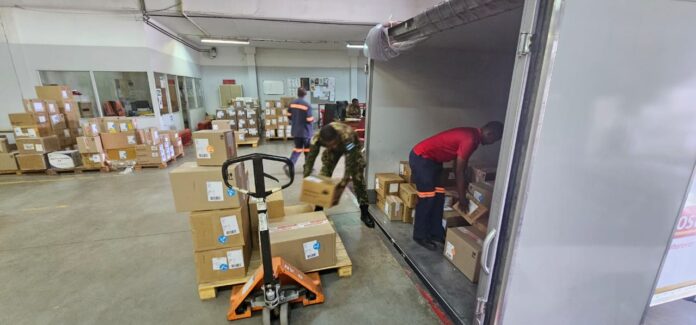
Modise also revealed that new consignments secured through the United Arab Emirates had begun arriving in late February. The shipment includes 338 different medical products expected to cover more than seven months of national demand, including medicines for hypertension, diabetes, epilepsy and infectious diseases.
Despite the improvements, the minister acknowledged that the emergency exposed deep structural weaknesses in the country’s health supply chain.
Government also relied on emergency loans of medicines from neighbouring countries while waiting for international consignments to arrive.
He said shortages of medicines disrupted surgical services, delayed urgent procedures and caused interruptions in treatment, while weaknesses in forecasting, procurement, logistics and distribution made the situation worse.
“The medicine stock-out crisis exposed systemic operational vulnerabilities within the healthcare sector,” he said.
To prevent a repeat of the crisis, government has introduced a series of reforms, including closer collaboration with the Botswana Defence Force to support logistics and procurement, the creation of a national logistics task force, and efforts to secure long-term financing for medicine purchases through a government-to-government credit facility with the United Arab Emirates.
Government also relied on emergency loans of medicines from neighbouring countries while waiting for international consignments to arrive.
Modise told Parliament that while the crisis had posed serious risks to patient care, the declaration of the emergency allowed government to stabilise the situation and begin rebuilding the medical supply system.
He said the focus now is on strengthening the supply chain to ensure the country never again faces shortages of life-saving medicines on the same scale.


