
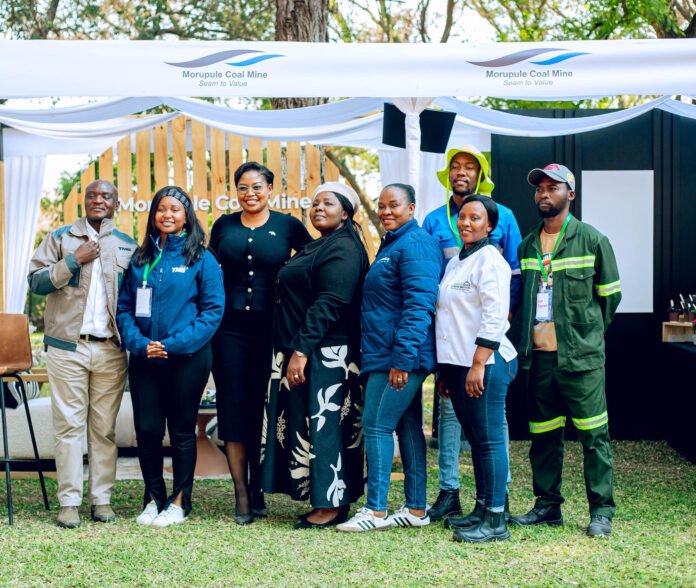


For years, debates about citizen participation in Botswana’s mining industry have largely revolved around procurement quotas and contract allocations. Edwin Elias, chief executive of Morupule Coal Mine (MCM), argues that the next stage of empowerment requires a broader ambition: turning citizen-owned suppliers into businesses capable of competing far beyond Botswana’s borders.
The issue has gained prominence as mining companies face increasing pressure to deepen localisation while maintaining operational efficiency and technical standards. For Elias, the challenge is not merely to increase the number of contracts awarded to citizen-owned firms, but to develop enterprises with the scale, expertise and resilience to thrive independently of mining procurement programmes.
“The future of CEEP is not simply about awarding more contracts,” he said. “It is about sustainably building the most promising citizen businesses to scale, with the skills, technology and capacity to compete at the highest level.” Morupule’s Citizen Economic Empowerment Programme (CEEP), launched in 2022, has become a central vehicle for that strategy. Since its inception, the mine has directed more than BWP1 billion towards citizen-owned businesses and supported the creation of over 2,500 jobs. The company is working towards targets of BWP1.5 billion in citizen procurement spend and 3,000 jobs by 2027.
That objective is influencing the mine’s approach to supplier development. Rather than concentrating solely on conventional supply contracts, MCM is seeking to expand citizen participation into technically specialised areas that have historically been dominated by international original equipment manufacturers (OEMs).
Citizen participation within MCM’s controllable procurement expenditure has risen from 29% in 2022 to 53% in 2025, reflecting a significant shift in the composition of its supply chain.
Yet Elias argues that procurement statistics alone do not capture the programme’s ultimate purpose.
“The real measure of success is whether Botswana develops companies that continue to grow long after individual mining contracts have ended,” he said. “We see that growth extending beyond Botswana’s borders, into the regional market and beyond.”
That objective is influencing the mine’s approach to supplier development. Rather than concentrating solely on conventional supply contracts, MCM is seeking to expand citizen participation into technically specialised areas that have historically been dominated by international original equipment manufacturers (OEMs).
Among the initiatives under consideration is the development of a domestic maintenance and equipment-rebuild ecosystem. Such a system would enable local engineering firms to refurbish heavy mining machinery, rebuild critical components and undertake specialist maintenance work that is often performed outside the country. “MCM has always taken an ecosystem approach to CEEP,” Elias said. “Meeting the mining sector’s needs at this level can only be achieved through collaboration between peers across the industry.” The shift reflects a broader transition from participation towards capability-building. The emphasis is increasingly on enabling citizen-owned businesses to undertake complex industrial and engineering work rather than remaining confined to subcontracting roles.
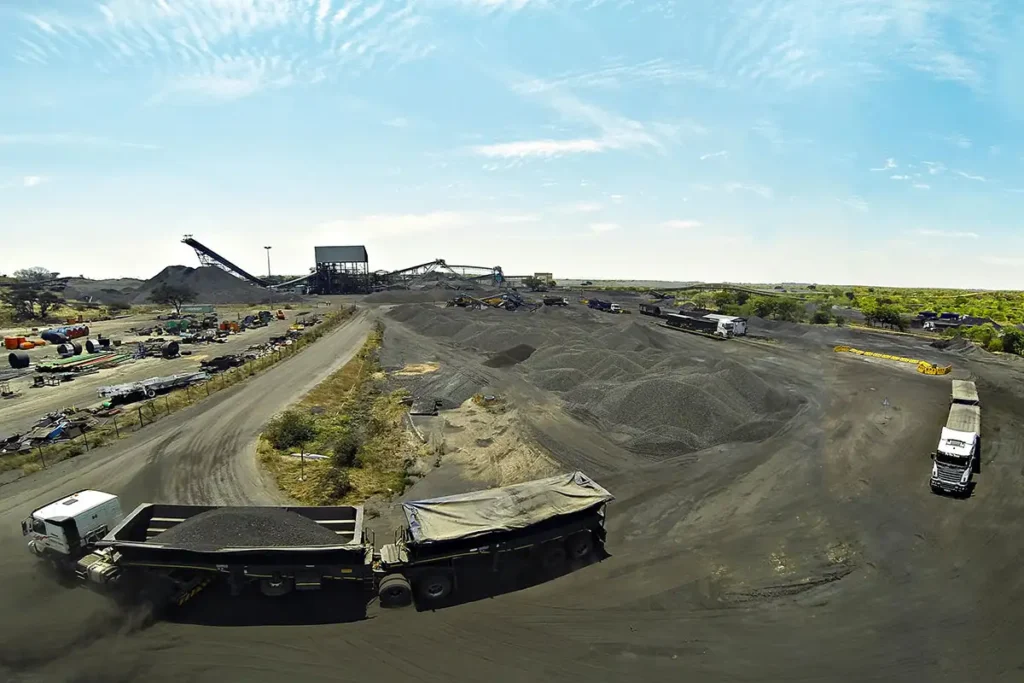
MCM says that process is already under way through joint ventures that combine international technical expertise with local ownership structures, as well as engineering projects that place citizen contractors alongside OEM specialists on equipment-rebuild and maintenance programmes.
The company has also reported growing citizen participation in areas such as structural-steel fabrication, conveyor systems, plate work and dust-suppression services—segments of the market that were until recently largely supplied by international contractors.
For Elias, however, the development of a competitive supplier base cannot be achieved by mining companies acting in isolation. He argues that greater coordination is needed among government agencies, development-finance institutions, mining companies and enterprise-support organisations. “The Botswana mining market is relatively small,” he said. “If we want globally competitive citizen businesses, we need collaboration across the industry to create sustainable demand and long-term opportunities.”
Such cooperation, he argues, would help aggregate demand, improve access to finance and create the certainty required for local firms to invest in specialised equipment, technology and workforce development.
As part of that effort, MCM continues to work with organisations including CEDA, Absa Bank Botswana, the United Nations Development Programme (UNDP), the Botswana Investment and Trade Centre (BITC) and UN Women to strengthen supplier-development initiatives and expand financing opportunities for citizen enterprises. As Botswana pursues broader ambitions in coal beneficiation, copper production, critical minerals and mineral-value addition, the debate around citizen participation is evolving. For MCM, the focus is increasingly shifting from the distribution of contracts to the creation of industrial capability.
The question, Elias suggests, is not simply how much procurement spending reaches citizen-owned businesses, but whether those businesses emerge with the capacity to compete across the mining sector, the region and eventually the global marketplace.


