
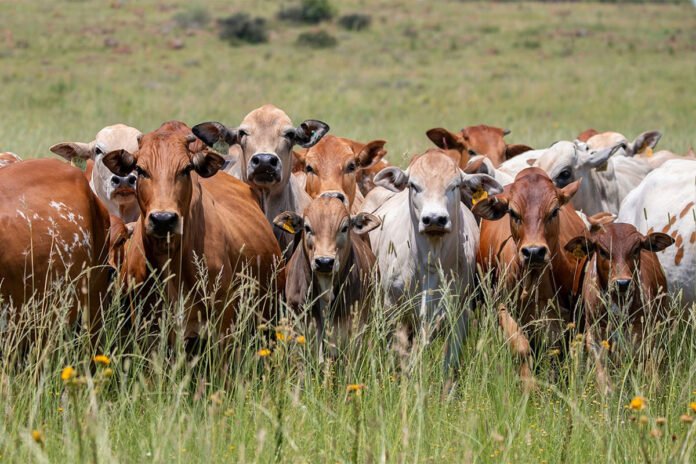


Foot-and-Mouth Disease outbreak has dealt a severe blow to the beef industry. The abattoir off take has fallen to just 4,725 tonnes against an annual target of 70,000 tonnes.
The scale of the shortfall, disclosed by President Duma Boko in his State of the Nation Address, illustrates the economic damage caused by the outbreak in Zones 11 and 13, where export activity has been disrupted.
The government has deployed P97 million in emergency funding to contain the disease and says it is committing additional resources to restore the country’s foot-and-mouth disease-free status.
“The FMD outbreak in Zones 11 and 13 dealt a severe blow to our beef industry, halting exports and reducing abattoir offtake to 4,725 tonnes against a target of 70,000 tonnes,” Boko said.
The crisis comes as the government attempts to diversify agricultural production and reduce dependence on imported food. In his address, Boko pointed to the expansion of domestic dairy production, reporting that 600 elite Girolando cows had been imported for Milk Valley Farm in Lobatse by September 30, bringing its total herd to 874.
The gap between the target and actual offtake amounts to 65,275 tonnes, a substantial disruption for an industry that has traditionally been one of Botswana’s important sources of export earnings and rural employment.
The consequences extend beyond abattoirs. Livestock farmers, transport operators, feed suppliers, meat processors and other businesses linked to the cattle value chain are exposed when animals cannot move freely and export markets become inaccessible.
Boko said the government was using rezoning and intensified surveillance to restore the country’s disease-free status.
The outbreak has also tested the relationship between government and the farming community.
The President acknowledged the contribution of farmers, businesses and communities in protecting the national herd, describing their response as an example of national cooperation.
The crisis comes as the government attempts to diversify agricultural production and reduce dependence on imported food. In his address, Boko pointed to the expansion of domestic dairy production, reporting that 600 elite Girolando cows had been imported for Milk Valley Farm in Lobatse by September 30, bringing its total herd to 874.
The farm is targeting annual production of approximately 15 million litres of milk at full capacity, potentially meeting up to 23% of national demand.
Poultry production has also made progress, with a local producer exporting the country’s first consignment of hatching eggs to Mozambique in July.


