


Botswana has dropped nine places in the latest World Economic Forum (WEF) Travel and Tourism Development Index. The decline places on the spotlight the government’s continued failure to connect international travelers to one of Africa’s premier safari destinations.
The 2026 index ranks Botswana 84th out of 110 economies, down from 75th in the previous edition. The decline comes despite a period of strong global tourism growth. The WEF reports that 92 percent of countries assessed improved their overall tourism development scores between 2024 and 2026. The report also notes that global travel and tourism development conditions are now at their strongest level since the pandemic.
The WEF index measures the conditions that enable sustainable tourism development. These include infrastructure, transport connectivity, the business environment, natural resources and tourism services. According to the report, the Air Transport Infrastructure pillar measures “the extent to which a country’s infrastructure offers sufficient air connectivity and access for travellers domestically and internationally.”
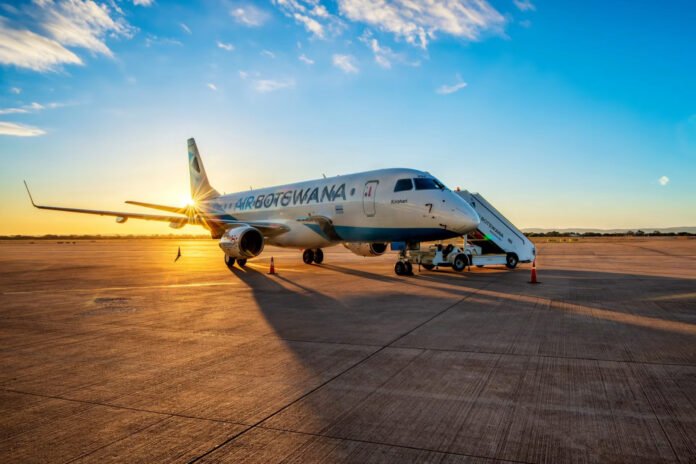
While Botswana remains internationally recognised for its wildlife resources, conservation efforts and high-value tourism model, air transport infrastructure has long been identified as one of the sector’s weakest links.
The latest decline comes as aviation connectivity increasingly separates the world’s tourism leaders from the rest. The WEF found that Air Transport Infrastructure was among the fastest-improving areas globally between 2024 and 2026. The pillar recorded a 7.2 percent increase. According to the report, progress was driven by “greater air route capacity and improved connectivity”. Airport connectivity scores worldwide increased by 8.5 percent over the same period.
Previous WEF assessments placed Botswana 91st globally for Air Transport Infrastructure. The ranking indicates the longstanding challenges around international connectivity and access. It reflected constraints in route networks, airline connectivity and aviation infrastructure. This is despite Botswana’s status as one of Africa’s leading safari destinations.
The latest decline comes as aviation connectivity increasingly separates the world’s tourism leaders from the rest. The WEF found that Air Transport Infrastructure was among the fastest-improving areas globally between 2024 and 2026. The pillar recorded a 7.2 percent increase. According to the report, progress was driven by “greater air route capacity and improved connectivity”. Airport connectivity scores worldwide increased by 8.5 percent over the same period.
The challenge for Botswana is particularly significant because tourism depends heavily on international visitors. Many travel to remote destinations such as the Okavango Delta, Chobe National Park and the Makgadikgadi region. Limited air access often translates into longer travel times. It can also mean multiple connections and higher transport costs for visitors. The latest decline comes as the government pursue plans to improve aviation infrastructure and attract additional international carriers into Botswana. Government and aviation officials have previously indicated that expanding air access is critical to unlocking tourism growth. This is particularly important in northern Botswana, where tourism remains a major economic activity.

The tourism sector remains one of Botswana’s most important sources of foreign exchange and employment. The industry supports airlines, lodges, tour operators and a wide range of businesses linked to the country’s wildlife economy.
The WEF report notes that destinations around the world are investing heavily in infrastructure that allows visitors to reach tourism markets. It found that tourism infrastructure, services and air connectivity were among the strongest areas of improvement globally during the latest reporting cycle.
The rankings suggest that while the country’s wildlife and conservation assets remain globally competitive, improving access to those attractions crucial.
The WEF concludes that the next phase of tourism growth will depend on “stronger regional connectivity” and infrastructure capable of supporting long-term tourism development. The report indicates that attracting visitors is one task, while ensuring they can reach the country efficiently remains another.


