
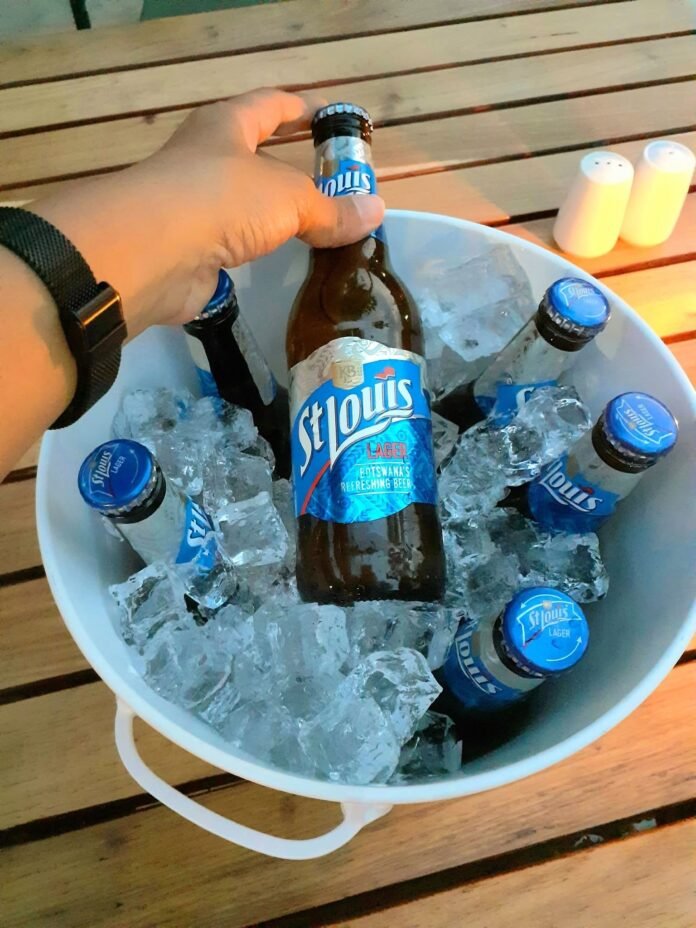


The Botswana Stock Exchange listed brewer, Sechaba Brewery Holdings Limited (SBHL), is confronting a difficult operating environment as weaker consumer volumes, rising fixed costs and a subdued economy weigh on the performance of its two major associates.
The group’s abridged half-year results for the six months ended 30 June 2026 show profit after tax declining by 24 percent year-on-year, underlining the pressure facing businesses exposed to household consumption and discretionary spending.
The biggest drag came from Kgalagadi Breweries (KBL), where volumes fell by 19.9 percent, from 729.6 hectolitres to 584.6 hectolitres, with the net revenue also declining 14.6 percent, while profit before tax dropped 22.1 percent.
The performance points to more than a temporary fluctuation in sales. With consumers facing constrained purchasing power and businesses absorbing higher operating costs, the decline in volumes demonstrates how quickly a subdued economy can feed through to consumer-facing industries.
Coca-Cola Beverages Botswana (CCBB) proved more resilient on the revenue line. Volumes declined by a comparatively modest 2 percent, while net revenue increased 6 percent. However, higher fixed operating costs and forex losses on operating activities pushed the associate into a loss, with profit before tax declining by 228.8 percent.
Taken together, the two businesses drove a 12 percent contraction in total volumes, from 1,267 hectolitres to 1,113.9 hectolitres.
On the business outlook, Botswana’s economy contracted sharply following the downturn in diamond activity, although government projections point to a 3.1 percent recovery in 2026, supported by mining and non-mining activity. The recovery, however, remains exposed to weak external demand and structural dependence on diamonds.
In the results statement signed by both Faith Asnath Nteta, Sechaba’s Managing Director, and Tabuya Tau Chairman, noted that “consequently, SBHL’s share of profits declined by 24.0 percent, resulting in a corresponding 24.0 percent reduction in profit after tax.”
On the business outlook, Botswana’s economy contracted sharply following the downturn in diamond activity, although government projections point to a 3.1 percent recovery in 2026, supported by mining and non-mining activity. The recovery, however, remains exposed to weak external demand and structural dependence on diamonds.
Globally, the environment is equally uncertain. The IMF projects global growth of 3 percent in 2026, down from 3.5 percent average growth in 2024/25, while warning that geopolitical tensions, energy shocks and renewed inflation pressures continue to cloud the outlook.
SBHL’s response will therefore be critical, and the group has already indicated that its associates are reviewing pricing and distribution strategies, tightening cost management and responding to changing consumer demand. They are also increasing engagement with local suppliers and incorporating recyclable materials into their operations.
“These measures are intended to strengthen the resilience of the businesses, mitigate the impact of external cost pressures and changing market conditions, and enable the associates to remain responsive to consumer needs,” reads the statement.
The outlook suggests that volume recovery, rather than simply revenue growth, will be the key measure to watch. For KBL in particular, reversing the 19.9 percent volume decline will be crucial to restoring operating leverage.
For SBHL, the first-half results are ultimately a warning that recovery in the broader economy has yet to translate into a broad-based recovery in consumer demand. The second half will test whether cost discipline, pricing strategies and an improving macroeconomic environment can begin to reverse the pressure.


