



For more than a century, De Beers was synonymous with diamonds. The company that once controlled nearly 90 percent of the world’s rough diamond trade built an empire on scarcity, marketing and unrivalled influence over the global gemstone market. Its famous slogan, “A Diamond Is Forever,” did more than sell jewellery; it reshaped consumer culture across generations and cemented diamonds as the ultimate symbol of love and commitment.
Today, however, the company stands at one of the most pivotal moments in its 138-year history.
Anglo American’s decision to sell its 85 percent stake in De Beers has triggered what could become one of the most consequential mining transactions of the decade. Botswana, which owns the remaining 15 percent, now finds itself weighing whether to exercise its contractual right of first refusal, acquire a larger stake alongside Anglo’s preferred bidder, or partner with another strategic investor. The decision will shape not only the future ownership of the world’s best-known diamond company but also the trajectory of Botswana’s economy, where diamonds still remain the backbone of exports, government revenue and foreign exchange earnings.
The proposed transaction comes against the backdrop of reports that prospective buyers are valuing De Beers at around US$1 billion, a remarkable decline for a company that Anglo American effectively valued at around US$6 billion when it consolidated ownership in 2011. Has one of the world’s most iconic mining companies become dramatically undervalued, or is the market merely recognising that the economics of natural diamonds have fundamentally changed?
Minister of State President, Moeti Mohwasa, has confirmed that Botswana is considering all available options, including acquiring a larger stake independently, partnering with Anglo’s preferred bidder or bringing another investor into the transaction. That flexibility gives Botswana considerable leverage because any purchaser will require a constructive relationship with the country that hosts De Beers’ most productive mining operations.
The sale reflects far more than a routine corporate restructuring. It shows a profound shift in the fortunes of an industry that for decades appeared almost untouchable. The global diamond market has endured several difficult years as demand weakened across key consumer markets. China’s once-insatiable appetite for luxury goods has slowed considerably amid prolonged economic uncertainty and weakness in its property sector. In the United States, the world’s largest jewellery market, consumers have become increasingly cautious about discretionary spending in the face of higher borrowing costs and persistent inflationary pressures.
Yet perhaps the greatest challenge confronting De Beers is one the company itself helped create by defining diamonds as symbols of rarity. Laboratory-grown diamonds have emerged as a genuine competitor to mined stones. Chemically and physically identical to natural diamonds, they can now be produced at a fraction of the cost. Prices for synthetic diamonds have fallen sharply over recent years, encouraging many consumers, particularly younger buyers, to question whether they should pay a premium for natural stones. The result has been sustained pressure on natural diamond prices, growing inventories and production cuts by several major mining companies. Reuters recently reported that the sale process has been complicated by a prolonged slump in global diamond prices, while Anglo American continues reshaping its business around commodities such as copper and premium iron ore that are expected to benefit from the global energy transition.
The decision by Anglo American to divest De Beers is part of a strategy to simplify its portfolio after facing mounting shareholder pressure and an attempted takeover by BHP. Under Chief Executive Duncan Wanblad, the company has sought to focus on commodities that investors increasingly regard as critical to electrification and decarbonisation. Diamonds, despite their prestige, no longer fit comfortably within that strategy.
Minister of State President, Moeti Mohwasa, has confirmed that Botswana is considering all available options, including acquiring a larger stake independently, partnering with Anglo’s preferred bidder or bringing another investor into the transaction. That flexibility gives Botswana considerable leverage because any purchaser will require a constructive relationship with the country that hosts De Beers’ most productive mining operations.
The company has already recorded billions of dollars in impairments against De Beers as market conditions deteriorated. It recently warned that its diamonds business is expected to post a first-half loss despite higher production levels, illustrating how increased output means little in a market where demand remains subdued. Anglo’s exiting De Beers represents an opportunity to concentrate capital on businesses that promise stronger long-term returns.
Botswana, however, faces an entirely different calculation. Unlike Anglo American, Botswana cannot view De Beers merely as another corporate asset. Through Debswana, the 50-50 mining partnership between the Government of Botswana and De Beers, the country produces approximately 70 percent of De Beers’ global diamond output. The company has been central to Botswana’s transformation from one of the world’s poorest nations at independence into an upper-middle-income economy widely recognised for prudent management of its mineral wealth. This means the sale is not simply about ownership. It concerns the future governance of Botswana’s most strategically important industry.
Minister of State President, Moeti Mohwasa, has confirmed that Botswana is considering all available options, including acquiring a larger stake independently, partnering with Anglo’s preferred bidder or bringing another investor into the transaction. That flexibility gives Botswana considerable leverage because any purchaser will require a constructive relationship with the country that hosts De Beers’ most productive mining operations.

International attention has increasingly focused on the identity of Anglo’s preferred bidder. Reports indicate that the consortium is led by former De Beers Chief Executive Gareth Penny, a mining executive who knows the business intimately after leading the company during one of its most profitable periods. According to international media reports, the consortium may also involve participation from Angola and Namibia, raising the prospect of an ownership structure with significantly greater African participation than at any point in the company’s modern history. Such a development would carry considerable symbolic importance.
For generations, Africa supplied the diamonds that fuelled De Beers’ global dominance while strategic decisions were largely made elsewhere. Greater African ownership could represent an important shift in how value, influence and decision-making are distributed throughout the industry.
Yet ownership alone will not resolve the industry’s deeper challenges. The reported US$1 billion valuation has understandably surprised many. On paper, acquiring one of the world’s most recognisable luxury brands, with interests in globally significant diamond deposits, appears remarkably inexpensive. But mining valuations depend on expected future earnings rather than historic prestige.
Potential buyers must consider declining consumer demand, intensifying competition from laboratory-grown diamonds, future capital expenditure requirements, mine rehabilitation liabilities and uncertainty surrounding long-term diamond prices. They are purchasing not only a collection of mining assets but exposure to an industry undergoing one of the most profound structural transformations in its history.
This is why what appears to be a bargain today could ultimately prove either visionary or expensive.
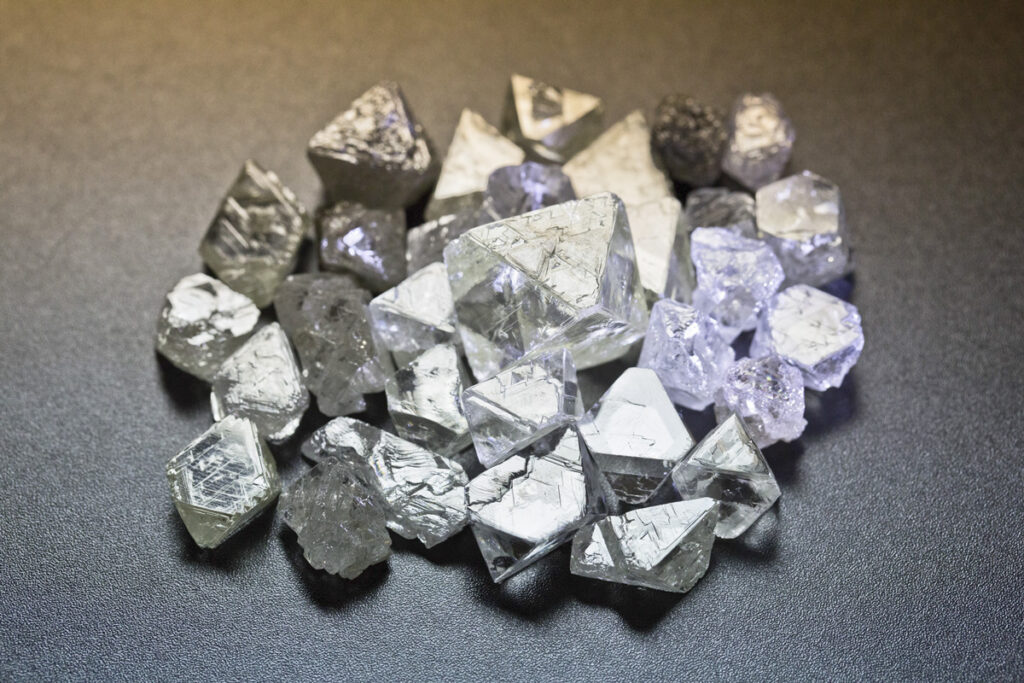
If consumer demand for natural diamonds rebounds and De Beers successfully reinforces the premium associated with naturally mined stones, today’s reported valuation may one day appear extraordinarily low. Conversely, if synthetic diamonds continue gaining market share while younger consumers become less attached to traditional notions of rarity, even US$1 billion could prove an ambitious price.
The implications for Botswana extend far beyond corporate finance.
Diamonds continue to underpin public finances, employment, infrastructure investment and foreign exchange earnings. Any decision to increase the country’s ownership would potentially provide greater influence over marketing, downstream processing and the capture of additional value across the global diamond supply chain. At the same time, greater ownership would expose Botswana more directly to the commercial risks of an industry facing unprecedented disruption.
The transaction therefore represents one of the most consequential economic decisions Botswana has faced in decades. It is not simply a question of whether to buy more shares in De Beers. It is a decision about how much confidence the government should place in the long-term future of natural diamonds themselves.


