
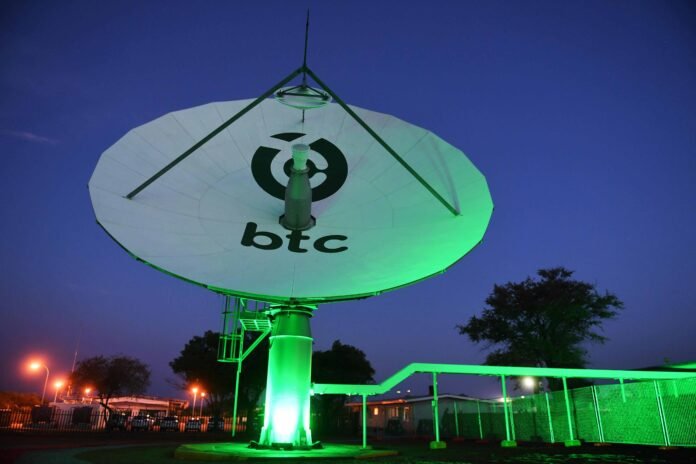


Botswana Telecommunications Corporation (BTC) is turning its gaze beyond Botswana’s borders, making Southern African Development Community (SADC) regional expansion the defining growth bet of its 2026–2029 strategy. The plan is to enter selected regional markets through partnerships rather than heavy balance-sheet investment.
As highlighted in its latest 2026 annual report, BTC’s primary focus areas of strategic execution and value creation for the 2026-2029 period are anchored on eight pillars. The pillar outcomes aim to drive BTC’s long-term financial performance, deliver customer-centric products and solutions, and advance the national development mandate.
The report states, “to sustain long-term growth objectives, BTC is looking beyond the domestic market and making deliberate and concerted efforts to execute a disciplined regional expansion strategy focused on the SADC corridor. Through partnership-led market-entry models, BTC aims to expand its digital and connectivity services into selected markets, generating new revenue streams while managing capital risk.”
This move by BTC should be seen as a significant shift for a business operating in an increasingly mature domestic market, where mobile penetration stood at 178 percent in March 2025, while BTC’s mobile market share fell from 15 percent to 14 percent, according to the BOCRA annual report 2025.
The regional ambition comes as telecommunications economics change, and connectivity alone is becoming harder to monetise, pushing operators towards digital services, enterprise technology, fintech and platforms.
The strategy also shows the direction in which the industry is moving. Worldwide operators are now going beyond connectivity to offer services in the areas of cloud computing, IoT, AI, APIs and managed digital services. BTC’s emphasis on data centres, cloud computing and managed ICT services therefore gives its SADC objective a wider commercial offering than that of traditional telecommunications companies.
According to the GSMA (GSM Association), the global industry organisation representing the interests of mobile operators and the wider mobile ecosystem, which BTCL is a member, says across Africa, mobile technologies contributed $240 billion, or 7.8 percent of GDP, in 2025. GSMA expects that contribution to reach $290 billion by 2030. Yet 63 percent of Africans remain within mobile broadband coverage without using mobile internet, highlighting the enormous opportunity beyond simply building networks.
The new strategy for BTC is based on a more solid foundation than the company possessed three years earlier. During its strategy from 2022 to 2025, revenue rose by 4 percent to P1.493 billion for the year ending March 2025, profit before tax increased by 30 percent to P259 million and gross profit went up by P91 million. For the period under review, revenues from digital services have increased by more than 300 percent, while fintech operations have more than doubled. The company also widened its range of digital services and converted over 90percent of its previous copper-fixed network to fibre-based GPON technology.
The importance of this above foundation lies in the fact that if a company is to achieve regional expansion it needs more than just a recognised brand, it needs competitive infrastructure, operational discipline and products which are capable of being marketed in different areas. BTC’s suggested partnership-based model could offer exactly this, as it reduces the amount of capital at stake while at the same time enabling the company to test out markets, build up alliances and expand where the commercial conditions are good.
The strategy also shows the direction in which the industry is moving. Worldwide operators are now going beyond connectivity to offer services in the areas of cloud computing, IoT, AI, APIs and managed digital services. BTC’s emphasis on data centres, cloud computing and managed ICT services therefore gives its SADC objective a wider commercial offering than that of traditional telecommunications companies.
BTC indicates that the fibre-based home broadband will be combined with streaming, security and IoT services. Investments in mobile networks will be directed towards improving 4G and extending 5G coverage. BTC Business will aim at promoting enterprise digital transformation, while Smega will turn into a greater source of revenue diversification and financial inclusion. As a result, customers will benefit from improved coverage, faster connectivity speeds, and improved convenience when accessing services.


