
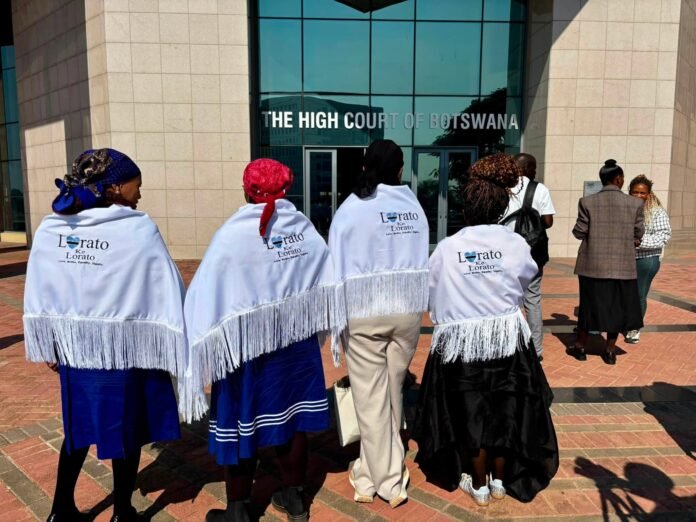

Lesbians, Gays and Bisexuals of Botswana (LEGABIBO) has accused former minister Biggie Butale of abusing the courts in a politically driven bid to frustrate Botswana’s landmark decriminalisation of consensual same-sex relations.
In papers filed before the High Court, LEGABIBO is seeking to join proceedings brought by Butale against the Attorney General, arguing that the outcome directly affects the constitutional rights of the people it represents.
LEGABIBO Chief Executive Officer Nozizwe Ntesang describes Butale in her founding affidavit as a “meddlesome interloper”. She argues that he has failed to demonstrate any direct legal prejudice arising from the removal of Sections 164(a) and 164(c) of the Penal Code. Butale is challenging Statutory Instrument No. 41 of 2026, through which the Law Revision Commissioner removed the provisions from the Penal Code following the Court of Appeal decision that rendered them unconstitutional.
His case, according to LEGABIBO, is that Parliament, not the Law Revision Commissioner, had the authority to formally remove the provisions, and that their deletion amounted to an unlawful usurpation of Parliament’s law-making powers. LEGABIBO fires back that the litigation is not merely legally flawed but amounts to an abuse of process that threatens the authority of Botswana’s courts.
His case, according to LEGABIBO, is that Parliament, not the Law Revision Commissioner, had the authority to formally remove the provisions, and that their deletion amounted to an unlawful usurpation of Parliament’s law-making powers. LEGABIBO fires back that the litigation is not merely legally flawed but amounts to an abuse of process that threatens the authority of Botswana’s courts.
It argues that once the Court of Appeal declared the provisions unconstitutional, they became inoperative, leaving the Commissioner with an administrative responsibility to ensure that the statute book reflected the binding judgment. The organisation goes further, describing Butale’s challenge as “an affront to the rule of law and constitutionalism”.
It argues that allowing unconstitutional provisions to remain in the Penal Code simply because Parliament has not separately removed them could undermine judicial authority and create confusion about what conduct is criminal. LEGABIBO also alleges that Butale’s litigation carries a significant political dimension.
The affidavit points to his references to his previous parliamentary and ministerial positions, his unsuccessful presidential bid, his intention to contest the 2029 elections, and his ambition ultimately to become President.

LEGABIBO argues that these matters have little relevance to interpreting the Revision of the Laws Act and instead expose what it sees as the political character of the case.
LEGABIBO says the litigation is being used as a substitute political platform to preserve controversy and delay implementation of a final constitutional judgment.
“The matter is, simply stated, dead on arrival,” the affidavit declares, arguing that restoring the deleted wording would not revive its legal force.
LEGABIBO warns that returning the provisions to the statute book could fuel uncertainty, harassment and discriminatory policing against gay and bisexual people, despite the provisions being unenforceable.


