


Botswana’s latest external-sector data confirms the economy remains heavily reliant on diamonds, with most exports concentrated in a few markets. This underscores both the strength of Botswana’s diamond trade and the risks of a narrow export base.
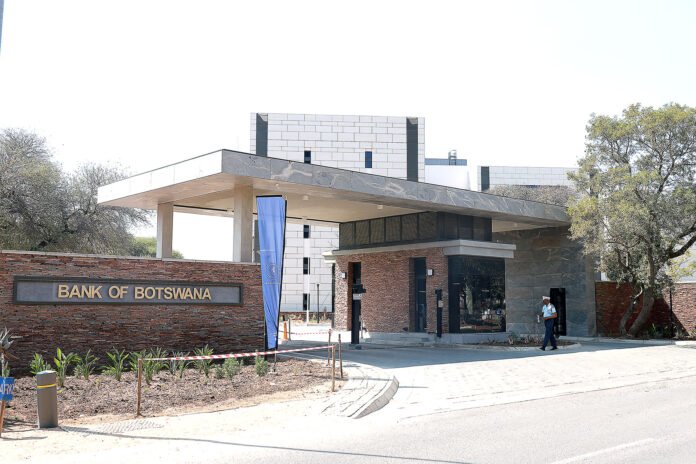
According to the Bank of Botswana’s June 2026 External Sector Statistics Bulletin, the United Arab Emirates (UAE) was Botswana’s largest export destination in 2025, taking 28.2 percent of exports, followed by Belgium at 17.3 percent and India at 16 percent. South Africa, China and Australia accounted for a further 10.3 percent, 8.4 percent and 7.9 percent, respectively. Together, the six markets absorbed 88.6 percent of total exports. Exports to the top three markets grew significantly. Shipments to the UAE rose 44.7 percent to P17.8 billion, to Belgium rose 131.9 percent to P10.9 billion, and to India rose 73.3 percent to P10.4 billion. The Bank attributes these gains mainly to higher diamond exports.
The bulletin notes that exports to the UAE, Belgium, and India were mainly rough diamonds. These markets operate primarily in the midstream of the diamond value chain, such as sorting, cutting, and polishing.
Botswana’s export concentration is notable compared to regional peers. Namibia’s exports include uranium, gold, diamonds, fish, and nickel, and are distributed across several markets. South Africa has a much more diversified industrial and agricultural export base, reaching multiple major markets.
This is significant because Botswana exports to markets that add value further along the chain. The key opportunity is to increase domestic value capture through cutting, polishing, manufacturing, and related services.
Imports are even more concentrated, as in 2025, South Africa supplied 62 percent of Botswana’s imports, mainly food, fuel, machinery, electrical equipment, chemicals, and rubber products. Namibia supplied 7.2 percent and China 6.6 percent.
However, trade relationships are shifting. Imports from Namibia fell 55.1 percent to P6 billion, mainly because diamond-related imports fell by P7.3 billion. Imports from China increased 51.3 percent to P5.6 billion. Recent monthly data highlights ongoing pressure. In May 2026, Statistics Botswana reported imports of P8.07 billion and exports of P4.82 billion, resulting in a merchandise trade deficit of P3.25 billion.
Botswana’s export concentration is notable compared to regional peers. Namibia’s exports include uranium, gold, diamonds, fish, and nickel, and are distributed across several markets. South Africa has a much more diversified industrial and agricultural export base, reaching multiple major markets. The World Bank’s latest Economic Update reports Botswana’s economy contracted by 0.7 percent in 2025 after a 2.8 percent decline in 2024. The report recommends accelerating diversification and private-sector development.
The opportunity extends beyond finding new export destinations. Botswana should capture more value before diamonds leave the country by expanding cutting and polishing, jewellery manufacturing, logistics, financial services, and other activities within the diamond ecosystem.


