
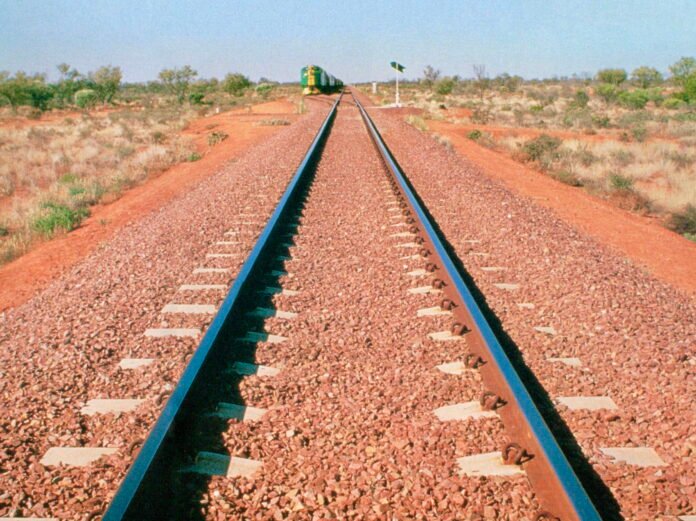


The Trans-Kalahari Railway Project, a long-awaited infrastructure development connecting Botswana’s mineral-rich interior to Namibia’s Atlantic coastline, is earmarked for the award of construction contracts in the 2027/28 financial year. This follows the successful completion of bankable feasibility studies. President Duma Boko announced the development during his State of the Nation Address (SONA) this week, signalling renewed momentum for a railway project that has remained on the drawing board for more than a decade.
“We next look to the 1,600 km Trans Kalahari Railway Project which had been delayed for over a decade and is now being accelerated. Following successful conclusion of both Bankable Feasibility Studies this year, procurement of contractors for both projects will happen during the 2027/28 financial year,” said President Boko as he delivered his speech.
The railway’s origins date back to 2010, when Botswana and Namibia signed a Memorandum of Understanding to explore the development of a railway linking Botswana’s coalfields to Namibia’s port infrastructure.
The approximately 1,600-kilometre railway is expected to connect Botswana’s Mmamabula coalfields and mineral-producing regions to Namibia’s Port of Walvis Bay, providing a strategic alternative export route for the landlocked country.
The project is estimated to cost US$16 billion, approximately P220 billion, making it one of Southern Africa’s most ambitious cross-border infrastructure investments.
Namibia Business Review has reported an estimated cost of N$200 billion, reflecting the scale of the proposed development.
The railway’s origins date back to 2010, when Botswana and Namibia signed a Memorandum of Understanding to explore the development of a railway linking Botswana’s coalfields to Namibia’s port infrastructure.
A prefeasibility study undertaken by Canadian consultancy CPCS Transcom between 2009 and 2011 concluded that the project was feasible, subject to detailed investigations.
Coal was identified as the principal commodity underpinning the railway’s commercial viability.
The two countries subsequently signed a bilateral agreement in 2014, establishing the framework for project implementation and the development of associated infrastructure, including coal storage, loading facilities and connections to the port.
However, progress was hampered by financial, technical and market challenges. A 2016 study identified depressed international coal prices as a significant obstacle to the railway’s bankability, alongside regulatory complexities, route alignment and environmental considerations.
In March 2025, former Minister of Transport and Infrastructure, Noah Salakae, told Parliament that “CPCS Transcom UK had been appointed to undertake the feasibility study, scheduled to run from April 2025 to March 2026.” The project management office had spent approximately P12.4 million since its establishment in 2014.
The project also faced prolonged delays in securing the consultancy required to undertake its detailed feasibility assessment.
In March 2025, former Minister of Transport and Infrastructure, Noah Salakae, told Parliament that “CPCS Transcom UK had been appointed to undertake the feasibility study, scheduled to run from April 2025 to March 2026.” The project management office had spent approximately P12.4 million since its establishment in 2014.
The railway’s renewed momentum followed the completion of feasibility assessments in 2026, paving the way for procurement and implementation planning.
Beyond coal exports, the railway is expected to support mineral transportation, agriculture, manufacturing and regional trade, while strengthening Botswana’s access to international markets.
The project is also anticipated to generate thousands of employment opportunities during construction, with officials estimating that its first phase could create approximately 6,000 jobs for Batswana and 4,000 for Namibians.


