
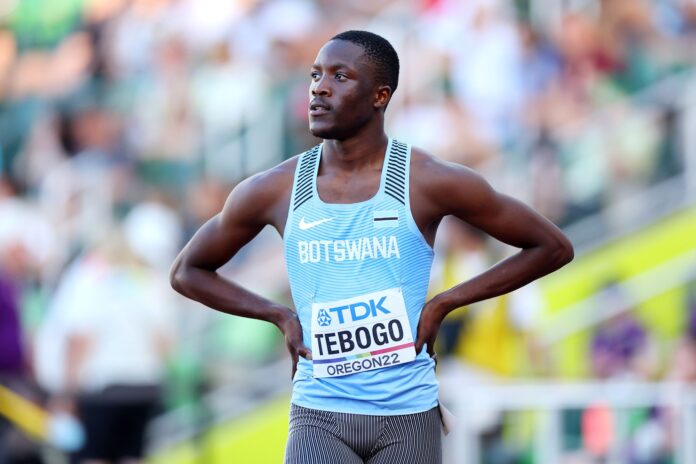


Botswana’s remarkable rise as a force in world athletics has drawn the attention of the sport’s global anti-doping watchdog, Athletics Integrity Unit (AIU).
The Unit has imposed mandatory testing obligations on the country’s athletes ahead of major international competitions.
The AIU announced recently that Botswana has been placed under special minimum testing requirements for athletes competing at the World Relays held in Gaborone in May and the World Athletics Championships in Beijing in 2027.
Although Botswana has not been classified as a “high-risk” doping nation, the AIU says the decision was prompted by consistently inadequate testing levels among national team athletes coupled with a dramatic improvement in international performances.
“The imposition of minimum testing obligations for Botswana for the World Relays 2026 and the Beijing World Championships 2027 stems from an inadequate response to repeated warnings about low testing levels, and an increase in performance at international level,” AIU Chair David Howman said.
The development places Botswana alongside Peru and Cuba, whose athletes must now satisfy additional anti-doping requirements before being allowed to compete at designated global events.
Under Rule 15 of the World Athletics Anti-Doping Rules, national federations can be held accountable for the effectiveness of anti-doping programmes in their countries. The regulations require nations competing at major championships to maintain “reasonable and proportionate” anti-doping programmes.
Under the new measures, Botswana’s athletes must undergo a minimum of three out-of-competition drug tests in the build-up to the relevant championships to be eligible for participation.
The move comes after Botswana enjoyed unprecedented success on the international stage. At the 2025 World Athletics Championships in Tokyo, Botswana captured two gold medals and a bronze medal, all delivered by the country’s men’s 400-metre stars in individual and relay events.
The country’s quarter-mile specialists continued their dominance when Botswana hosted the World Relays in Gaborone earlier this year, securing another gold medal and reinforcing the nation’s emergence as a sprint powerhouse.
In the lead-up to the Gaborone event, Botswana’s leading athletes were already subjected to increased testing by international anti-doping authorities.
The AIU said Botswana’s designation should not be interpreted as evidence of widespread doping. Instead, it reflects concerns about whether the country’s anti-doping programme has kept pace with its growing international success.
Under Rule 15 of the World Athletics Anti-Doping Rules, national federations can be held accountable for the effectiveness of anti-doping programmes in their countries. The regulations require nations competing at major championships to maintain “reasonable and proportionate” anti-doping programmes.
The AIU’s action stands in contrast to India, which has been elevated from Category B to Category A -the highest doping-risk classification -after recording some of the world’s highest numbers of anti-doping rule violations in recent years.


