
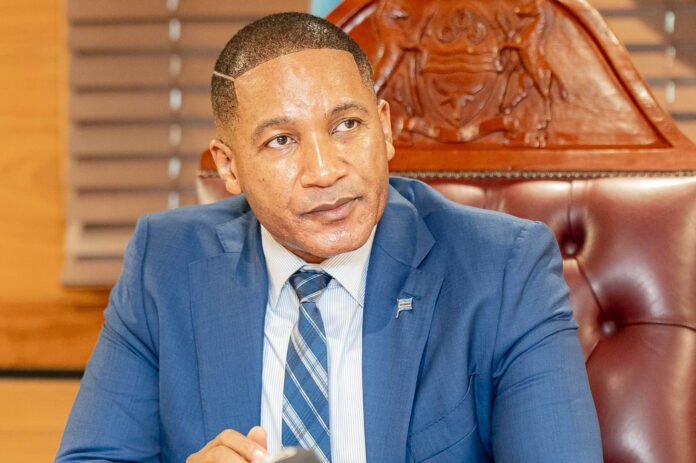


President Duma Boko’s position on the death penalty is coming under renewed scrutiny. This follows the release of Lesedi Molapisi from a Bangladeshi prison where she had spent years facing execution. She was sentenced to death in Bangladesh after being convicted of drug smuggling.
The government has portrayed Molapisi’s release as the result of concerted diplomatic intervention, including an appeal by President Boko for executive clemency and commutation of her death sentence.
Since the UDC came to power in 2024, President Boko has not hanged any prisoner on Botswana’s death row. Yet Botswana remains one of the countries that retains the death penalty in law, creating a sharp tension between the country’s continued legal position and the government’s international advocacy on behalf of a citizen condemned to death abroad.
Molapisi’s ordeal has therefore raised uncomfortable questions about whether Botswana can campaign for the protection of its citizens from execution overseas while continuing to retain capital punishment at home.
The issue becomes even more politically sensitive amid growing claims from organised labour that the government’s proposed constitutional court could ultimately become the vehicle for abolishing the death penalty. The Manual Workers Union and other labour voices have reportedly argued that the proposed constitutional court is intended, among other things, to address constitutional questions surrounding capital punishment.
The government’s handling of Molapisi’s case has also exposed the danger of oversimplifying the circumstances of her release. While the Office of the President says Boko appealed for executive clemency and commutation of her death sentence, Ditshwanelo says Molapisi was ultimately acquitted on appeal after the Bangladeshi High Court found no evidence of her involvement in heroin smuggling.
Their argument draws attention to the experience of neighbouring South Africa, where the Constitutional Court delivered a landmark judgment in S v Makwanyanein 1995, declaring the death penalty unconstitutional on the basis that it violated fundamental rights, including the right to life and the prohibition of cruel, inhuman or degrading punishment. That precedent has long cast a shadow over Botswana’s continued retention of capital punishment. For Boko, a lawyer and constitutional reform advocate who rose to power promising significant institutional change, the death penalty could become one of the most consequential tests of whether his administration is prepared to translate its human-rights rhetoric into constitutional reform.
The government’s handling of Molapisi’s case has also exposed the danger of oversimplifying the circumstances of her release. While the Office of the President says Boko appealed for executive clemency and commutation of her death sentence, Ditshwanelo says Molapisi was ultimately acquitted on appeal after the Bangladeshi High Court found no evidence of her involvement in heroin smuggling.
That distinction matters as clemency implies mercy following a conviction. Acquittal means the conviction itself was overturned.
The question is now whether the Molapisi case will remain simply a diplomatic success story or become a catalyst for confronting the country’s own death penalty.
Boko has so far presided over a period in which no death-row inmate has been hanged since the UDC took power. Whether that represents an undeclared moratorium, a change in political practice or merely a pause remains unclear.The proposed constitutional reforms could force that ambiguity into the open.


