
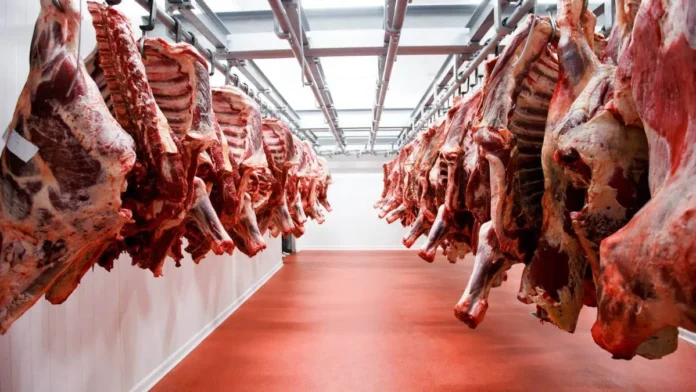

Botswana’s prized beef export industry has suffered a major blow after the European Union (EU) confirmed an immediate ban on imports. The Commission cited the recent outbreak of foot and mouth disease (FMD) and the suspension of the country’s disease-free status by the World Organisation for Animal Health (WOAH) for its declension.
The Commission indicated that the decision also follows an outbreak detected at a cattle establishment in Ramatlabama, in the Barolong region of the Southern District, confirmed on April 1, 2026 through laboratory testing. Botswana formally notified the European Commission a day later.
In a strongly worded regulation adopted in Brussels on April 21, the EU made it clear that the risk posed by the outbreak could not be ignored. “Due to the risk of the introduction of FMD into the Union by means of consignments of fresh meat… the entry into the Union… should no longer be authorised,” the Commission stated.
European Commission President Ursula von der Leyen signed off on the document containing the regulation, making it immediately binding across all EU member states. “This Regulation shall be binding in its entirety and directly applicable in all Member States,” the document says.
The EU regulation says“The entry into the Union from zones BW-1, BW-2, BW-3 and BW-5 in Botswana of such consignments should no longer be authorised,” it reads, effectively shutting down all previously approved export corridors.
The affected area falls within veterinary disease control zone 11 which is a critical export zone that hosts Botswana’s only EU-approved slaughterhouse. The Commission highlighted a key vulnerability, noting that the zone “has no movement control measures in place or physical barriers with the veterinary disease control zones 12 and 13,” raising fears of rapid disease spread.
According to the document, the situation worsened after WOAH moved to suspend Botswana’s coveted “FMD-free zone where vaccination is not practised” status. The suspension, effective March 31, 2026, impacts a wide network of zones including 3c (Dukwi), 4b, 5, 6a, 8, 9, 10, 11, 12 and 13- effectively dismantling the sanitary foundation that underpinned Botswana’s beef exports to premium markets.”
The EU regulation says“The entry into the Union from zones BW-1, BW-2, BW-3 and BW-5 in Botswana of such consignments should no longer be authorised,” it reads, effectively shutting down all previously approved export corridors.
Reports indicate that the move is expected to send shockwaves through Botswana’s agricultural sector where beef exports have long been a cornerstone of rural livelihoods and foreign exchange earnings. The EU has historically been one of Botswana’s most lucrative markets, offering preferential access and premium prices.
Despite acknowledging the economic implications, the Commission emphasized urgency over compromise. “Taking into account the FMD situation in Botswana… the amendments… should take effect as a matter of urgency,” the regulation states.
The decision was endorsed by the EU’s Standing Committee on Plants, Animals, Food and Feed suggesting a unified stance among member states on the need to protect the bloc’s biosecurity.
Reports indicte tht the Acting Minister of Lands and Agriculture, Edwin Dikoloti, warned that Botswana has 24 months to regain its FMD-free status under WOAH standards.


