
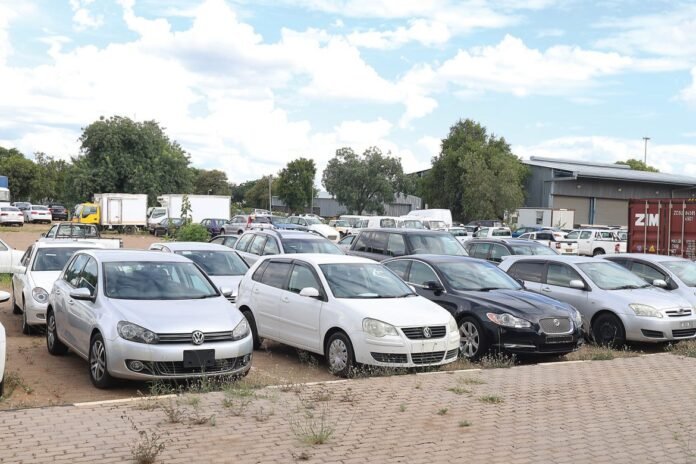


The latest Statistics Botswana second quarter of 2026 report on transport and infrastructure figures has presented a decline in vehicle registrations and rail freight, despite the economy showing signs of recovery.
The latest figures have revealed that, first-time vehicle registrations fell 7.2 percent from the previous quarter, to roughly 7,534 units. 78.2 percent were used vehicles, with 90.8 percent of passenger cars being used. Japan supplied 67.9 percent of first registrations and 86.2 percent of used vehicles, while South Africa accounted for 69.5 percent of new vehicles.
The report says “the decline was reflected across several body types, including tractors (35.2 percent), buses (20.7 percent), passenger cars (9.2 percent), trucks (5.8 percent) and vans (0.3 percent). Conversely, registrations of tankers/horses went up by 43.0 percent, while motorcycles and trailers increased by 34.8 and 6.2 percent respectively.”
According to the statistics, passenger cars dominated registrations, accounting for 73.0 percent of the total, followed by vans (8.3 percent), trailers (6.8 percent), and trucks (5.6 percent). Motorcycles accounted for the smallest share at 0.4 percent.
This points to constrained household and business purchasing power. This is evidenced by the Bank of Botswana which has reported inflation at 10.7 percent in May and June, above its 3–6 percent objective range, before easing to 9.4 percent in July and 9.3 percent in August.
Although lower fuel prices helped reduce transport-related inflation, elevated prices continue to squeeze disposable incomes and raise costs.
There were 135,021 licence renewals, about 18 renewals for every first registration. Renewals rose 2.7 percent quarter-on-quarter, while first registrations declined, which could possibly suggests households and businesses are retaining existing assets for longer as replacement costs remain high.
The dominance of used vehicles may reflect affordability rather than preference. Yet, the data also contains a positive signal as tankers/horses, motorcycles and trailers recorded quarterly increases, suggesting pockets of demand linked to logistics, commercial activity and goods movement.
There were 135,021 licence renewals, about 18 renewals for every first registration. Renewals rose 2.7 percent quarter-on-quarter, while first registrations declined, which could possibly suggests households and businesses are retaining existing assets for longer as replacement costs remain high.
Meanwhile, on the rail transport sector,a total of 143,531 net tonnes of cargo was transported by rail during the quarter under review, representing a 16.4 percent decrease compared to the previous quarter.
Of this volume, total exports accounted for 41.0 percent, local traffic comprised 22.2 percent, and total imports made up 18.7 percent, while transit traffic accounted for the remaining 18.1 percent. This quarter-on-quarter decline spanned almost all traffic categories except total exports, which grew by 10.5 percent.
Conversely, total imports dropped by 36.6 percent, local traffic fell by 27.2 percent, and transit traffic decreased by 19.6 percent. The report further shows that, “revenue generated from rail transport during the quarter amounted to P39.4 million, signifying an 8.2 percent reduction compared to the P42.9 million generated in the previous quarter.
The largest share of this revenue was derived from the transportation of exports at 34.9 percent, of which 85.8 percent came from exports to the South.”
The World Bank recently indicated that the country’s economy is showing signs of recovery, with 2026 growth projected at 3.4 percent, but warns that weak diamond sales, subdued household spending and limited investment constrain momentum.


