
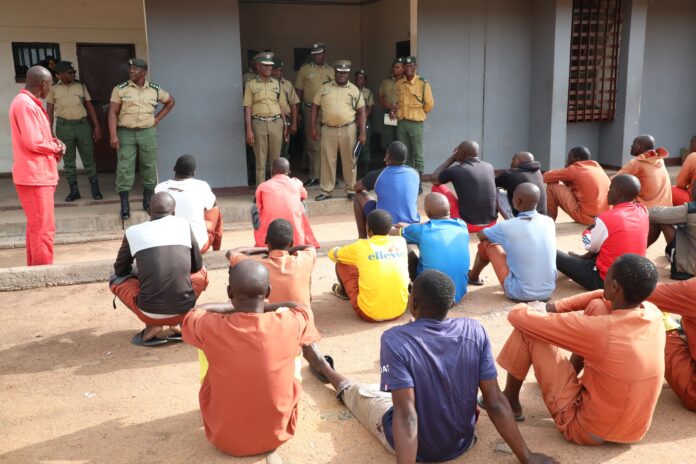


Cash-strapped government is increasingly turning to prison labour including agriculture and the productive skills of offenders to keep the cost of running the state down with millions of Pula already being saved through work traditionally outsourced to private contractors.
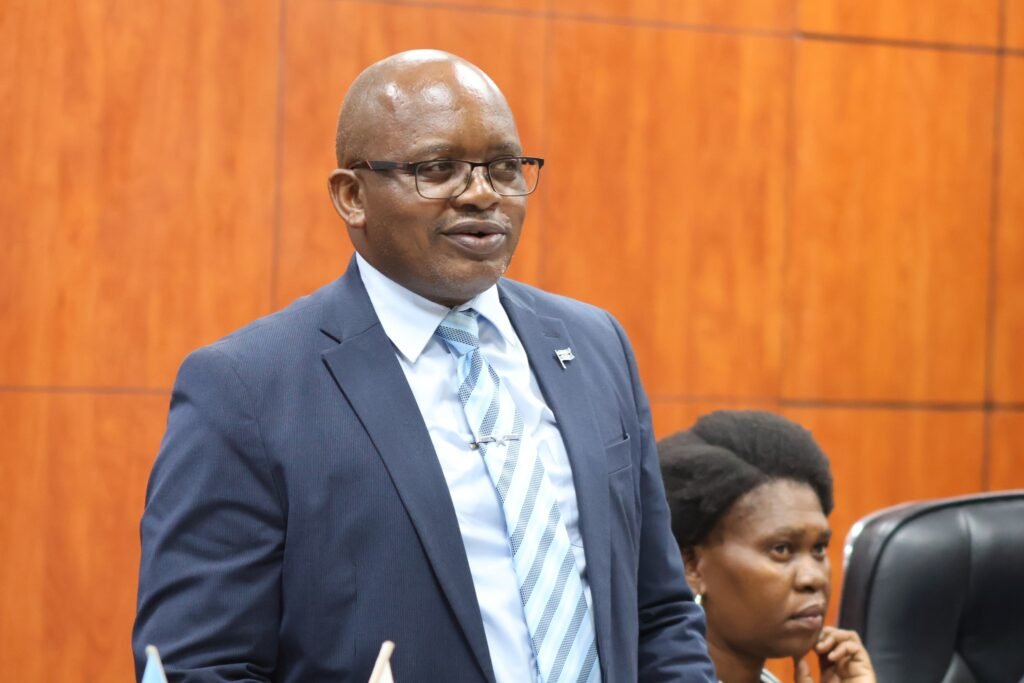
Minister of Justice and Correctional Services Ramaotwana Nelson Ramaotwana told Parliament that the Botswana Prison Service had become an unexpected weapon in government’s fight against rising costs, producing food, maintaining public infrastructure and even constructing veterinary disease-control fences.
During the 2025/26 farming season, the Prison Service harvested 3,000 bags of maize, 368 bags of sorghum and 147 bags of beans. It subsequently processed and packaged 1,225 bags of maize meal, 550 bags of samp, 336 bags of sorghum meal and 147 bags of beans for prison consumption.
The processed food alone was valued at P1.4 million, while vegetables and citrus fruits supplied to prison kitchens were worth another P642,210.
According to the minister, the projects cost government P5.97 million using procured materials and prison labour. Had the work been undertaken through the open market, the bill was estimated at P10.15 million.
Together with 20,000kg of mixed stock feed valued at P138,400, the total agricultural output reached approximately P2.04 million.
Ramaotwana described the initiative as more than prisoner rehabilitation.
“Prison agriculture is not only a rehabilitation programme, but also a practical contribution to fiscal discipline and national food security,” he said.
But it has emerged that agriculture is only part of the savings drive.
The government has also deployed prison labour to construction and maintenance projects, including the Divisional Command Offices in Francistown and the Mahalapye Prison Administration Block.
According to the minister, the projects cost government P5.97 million using procured materials and prison labour. Had the work been undertaken through the open market, the bill was estimated at P10.15 million.
That translates into a reported saving of approximately P4.18 million.
“The use of prison labour has resulted in a saving of approximately Four Million, One Hundred and Eighty Thousand Pula from possible labour and related costs,” Ramaotwana told Parliament.
It has also emerged that the savings did not stop at correctional facilities.
Prison labour was also deployed to maintain facilities belonging to other government institutions, including Matlala Junior Secondary School in Tlokweng and Dikgatlho Junior Secondary School in Khudumelapye, generating more than P246,545 in labour-cost savings.
The strategy, however, exposes the severity of the government’s cost pressures. With public finances under strain, prison farms and offender labour are being pushed beyond rehabilitation into the frontline of fiscal management.
In another example, 24.25 kilometres of veterinary containment fencing between Kanye and Ranaka has been erected by trade-tested offenders.
The government says the work is helping contain animal diseases while avoiding the cost of hiring private contractors.
“The initiative also gives offenders an opportunity to apply their acquired skills in support of an urgent national priority,” Ramaotwana said.
The strategy, however, exposes the severity of the government’s cost pressures. With public finances under strain, prison farms and offender labour are being pushed beyond rehabilitation into the frontline of fiscal management.
Government now plans to expand prison agriculture using drip irrigation, climate-smart farming and climate-resilient seed varieties.
Ramaotwana acknowledged that this will require more funding for machinery, equipment and modern farming technology.


