
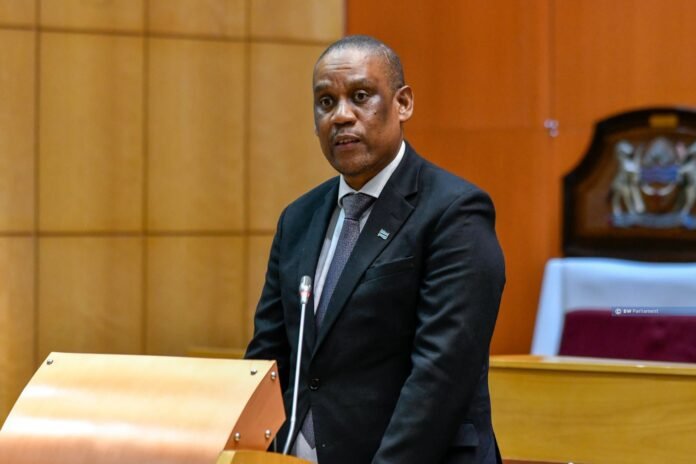


The government has been asked to account for the utilisation of the P5 billion Health First Botswana Partnership Fund. Leader of the Opposition Dumelang Saleshando is demanding a full accounting of the money amid continuing shortages of medicines, staff, equipment and other essential healthcare resources.
The questions were raised in Parliament as the opposition argued that the prolonged crisis is no longer simply a shortage of medicines, but a failure of governance, procurement and accountability.
The government established the P5 billion fund after President Duma Boko declared a nationwide State of Public Health Emergency on August 25, 2025, following the collapse of the national medical supply chain. The declaration was accompanied by the activation of a National Task Force, emergency procurement measures and the release of P250 million in emergency funding by the Ministry of Finance.
But Saleshando says that, more than a year after the emergency declaration, the opposition is demanding to know what has happened to the much larger P5 billion fund.
“Full accountability for the P5 billion Health First Botswana Partnership Fund. Where has this money gone? How much has been spent? What has been procured? How has the health sector significantly improved?” Saleshando demanded.
“Full accountability for the P5 billion Health First Botswana Partnership Fund. Where has this money gone? How much has been spent? What has been procured? How has the health sector significantly improved?” Saleshando demanded.
The questions come against the backdrop of a healthcare system that, according to Saleshando, remains under severe pressure despite repeated assurances from government that the situation is improving.
He said medicine availability reportedly plunged to as low as 17 percent. While the Ministry of Health has since reported improvements, including 44 percent availability of diabetes medicines and 38 percent availability of cardiovascular medicines as of June 2026, the opposition argues that such figures remain evidence of a system in distress. “Improvement from a crisis level is not the same as resolution of the crisis,” he said.
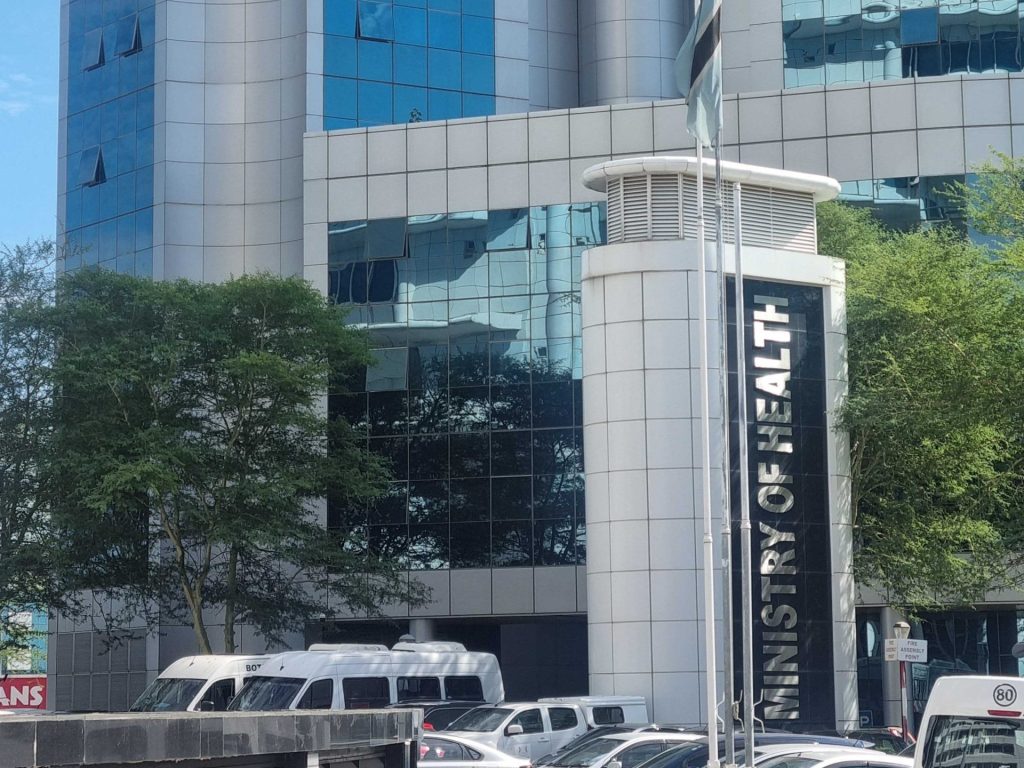
Saleshando wants the government to provide a detailed financial trail showing how the P5 billion was allocated, what contracts were entered into, which suppliers were paid, and what medicines, consumables, equipment and other interventions were financed.
The demand also puts the spotlight on the Central Medical Stores (CMS), where the Public Accounts Committee has reportedly exposed serious administrative weaknesses.
According to Saleshando, an accounting officer told Parliament that one of the country’s biggest problems was the presence of “unscrupulous middlemen” in the procurement system. He argues that repeated parliamentary assurances that medicines were being procured and delivered have failed to translate into reliable supplies at health facilities.
According to Saleshando, an accounting officer told Parliament that one of the country’s biggest problems was the presence of “unscrupulous middlemen” in the procurement system. He argues that repeated parliamentary assurances that medicines were being procured and delivered have failed to translate into reliable supplies at health facilities.
“This is not oversight. This is mismanagement,” he said.
Saleshando said Princess Marina Hospital is struggling with overcrowding, long queues, and shortages of beds and other essentials, while rural health facilities face even greater challenges because of shortages of doctors, diagnostic equipment and referral capacity.
He also raised concerns about the apparent contradiction of a healthcare system reporting staff shortages while qualified doctors and pharmacy graduates remain unemployed or await placement.
“What kind of health system has a shortage of doctors while qualified doctors are sitting at home unemployed?” he asked.
Saleshando further called for an independent and transparent investigation into procurement failures at CMS and the Ministry of Health, with the findings made public.
He also called for the establishment of a national medicines availability and stock-out monitoring system, a comprehensive health-sector human resources audit, improved rural healthcare, accelerated maintenance of medical equipment and measurable targets for reducing waiting times. He warned the government against responding to the crisis simply by throwing more money at the health sector. “Money without proper systems, accountability and administrative discipline will not produce the healthcare system that Batswana deserve,” he said.


