


For decades, the Okavango Delta has been photographed, documented and celebrated as one of the natural wonders of the world. It is the Botswana of tourism brochures: a shimmering labyrinth of channels, papyrus reeds and wildlife encounters. But what happens when the people who live with its waters become the storytellers?
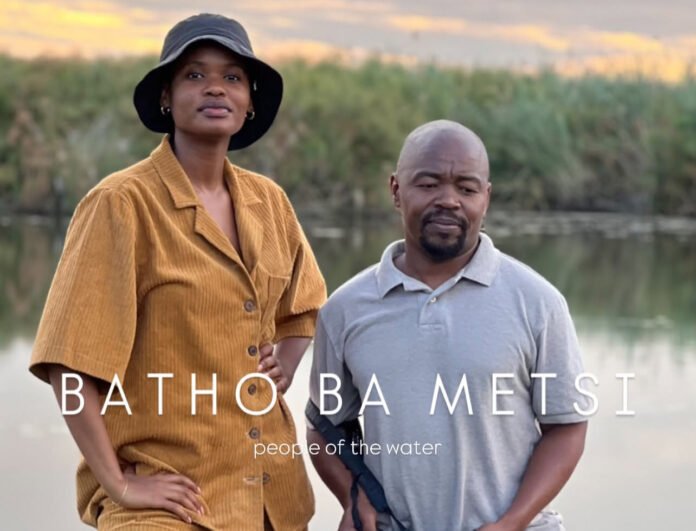
That question sits at the heart of Batho Ba Metsi, Setswana for People of the Water, a documentary that recently premiered in Gaborone. The screening marked the arrival of a film that seeks to shift the lens from the Delta’s wildlife to the communities whose lives are intertwined with its seasonal rhythms.
Produced in Botswana and filmed entirely by an all-Batswana crew, Batho Ba Metsi takes viewers beyond the postcard imagery that has long defined the Okavango in the global imagination. Instead, it follows mokoro polers, basket weavers, elders, youth storytellers and community leaders whose daily experiences reveal another side of one of Africa’s most celebrated landscapes.
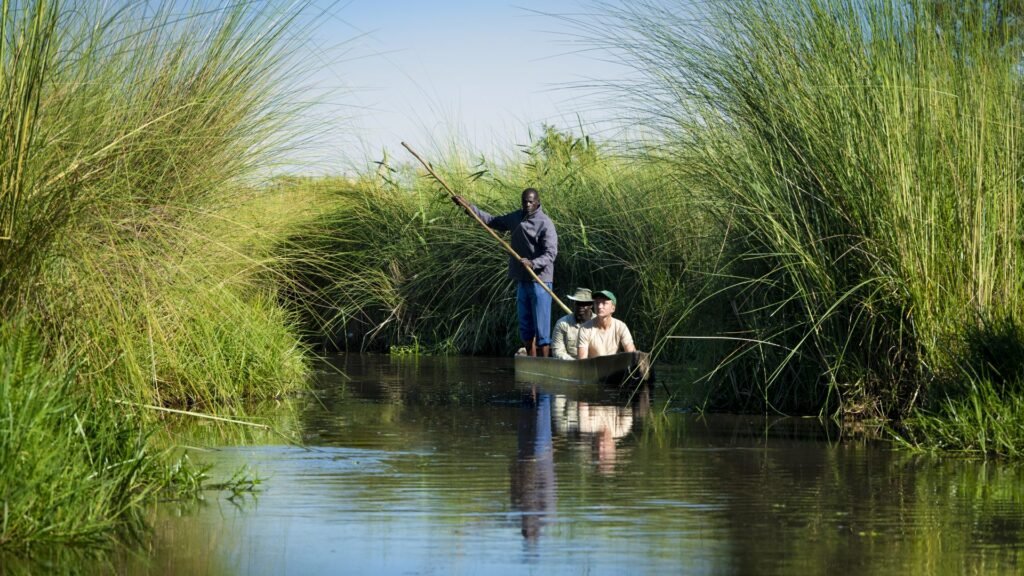
The documentary arrives at a moment when conservation conversations are changing. Increasingly, environmentalists are recognising that protecting ecosystems cannot be separated from understanding the people who inhabit them. The film positions itself squarely within that debate, exploring how culture, indigenous knowledge and community wellbeing intersect with conservation.
What makes Batho Ba Metsi compelling is that it does not present the Delta as a pristine wilderness untouched by human presence. Instead, it argues that people have always been part of the story.
“The Delta is more than a landscape. It is home, culture and life woven together,” says director Moabi Mogorosi.
That sentiment runs through the documentary. Water is not merely a scenic backdrop. It is transport, livelihood, memory and identity. The Delta’s channels carry more than tourists; they carry stories passed down through generations, stories that explain how communities have adapted to and cared for this environment long before conservation became a global industry. Presented by Palesa Molefe, the film adopts an observational approach, allowing its subjects to speak for themselves. There is little sense of narration imposed from above. Instead, viewers encounter personal reflections and lived experiences that reveal the complex relationship between local communities and the landscape they call home.
In recent years, global conservation discourse has increasingly focused on community-centred approaches that recognise local knowledge as an essential component of environmental stewardship. The film contributes to that conversation by highlighting voices that are often absent from mainstream narratives about the Okavango.
That decision feels significant. Botswana’s conservation success is often told through statistics, hectares protected, wildlife populations sustained, tourism revenues generated. Those achievements matter. Yet numbers rarely capture the emotional and cultural dimensions of belonging to a place. Batho Ba Metsi attempts to fill that gap.
The documentary’s title is also its thesis. The people of the water are not peripheral to the Delta; they are central to it.
In recent years, global conservation discourse has increasingly focused on community-centred approaches that recognise local knowledge as an essential component of environmental stewardship. The film contributes to that conversation by highlighting voices that are often absent from mainstream narratives about the Okavango.
Visually, the Delta remains breathtaking. But the documentary’s greatest achievement may be its insistence that beauty alone is not enough. Landscapes gain meaning through the people who inhabit them, remember them and depend on them.
As Botswana continues to navigate the balance between conservation, tourism and development, Batho Ba Metsi offers a timely reminder that the future of the Delta cannot be discussed without the communities whose lives are shaped by its waters. The film argues that they are not simply beneficiaries of conservation efforts; they are participants, custodians and storytellers in their own right.
While the Okavango often serves as a national symbol, Batho Ba Metsi asks audiences to look beyond the landscape and listen more closely. What emerges is a portrait not just of a place, but of the people who give that place its meaning.


