


For decades, Botswana’s mining model has been straightforward. Prospectors discover minerals, large investors raise capital, mines are built and government collects taxes and royalties. Citizens participate largely as employees, contractors and suppliers.
The Citizen Entrepreneurial Development Agency (CEDA) wants to change that equation.
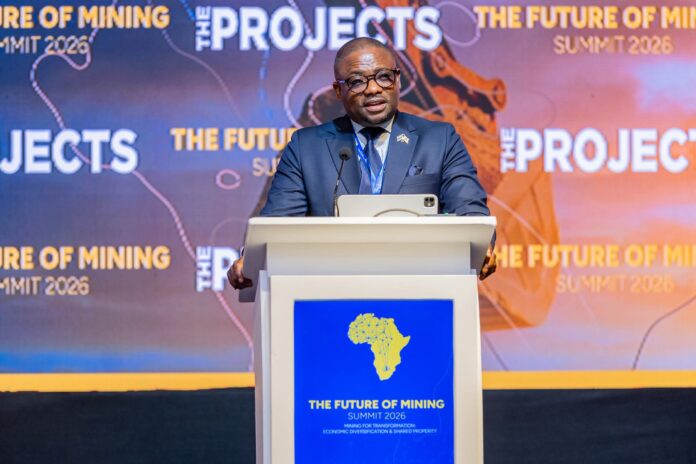
At the recent Future of Mining Summit, CEDA chief executive Khalala Mokefane outlined plans that would push the agency into one of mining’s most difficult frontiers: financing the earliest and riskiest stages of mineral discovery.
The proposal reflects a growing concern within Botswana’s economic policy circles. While citizen-owned companies have gradually secured contracts in transport, construction, engineering and support services, very few local firms participate in exploration, where mining wealth is first created.
The reason is simple. Exploration is expensive, uncertain and often unsuccessful.
A company may spend years conducting geological surveys, drilling boreholes and evaluating mineral deposits without ever discovering a commercially viable resource. Commercial banks typically avoid such risks. Private investors prefer projects with proven reserves and predictable cash flows.
Yet without exploration there are no new mines.
CEDA’s proposed Mining Value Chain Financial Suite seeks to address that gap through specialised financing instruments including exploration risk capital, stage-gate financing and convertible debt structures designed specifically for mining ventures.
The agency’s presentation identified geological surveys, prospecting, drilling, resource evaluation and feasibility studies as priority areas for future support.
Historically, CEDA’s mining-related portfolio has concentrated on businesses servicing established mines. The institution has financed citizen-owned companies involved in transport and logistics, engineering services, construction, industrial maintenance, information technology and equipment supply.
It is a notable departure from Botswana’s traditional development-finance approach.
Historically, CEDA’s mining-related portfolio has concentrated on businesses servicing established mines. The institution has financed citizen-owned companies involved in transport and logistics, engineering services, construction, industrial maintenance, information technology and equipment supply.
According to the agency, these investments have channelled P62.4 million into 19 citizen-owned businesses and created 410 jobs.
Mokefane argued, however, that citizen participation needs to extend beyond supplying mines to helping create them.
“CEDA’s priority is to ensure that citizen-owned enterprises participate meaningfully across the mining value chain by improving access to affordable development finance,” he said.
The agency is positioning itself not merely as a lender to suppliers but as a financier across the entire mining lifecycle.
Under the model presented at the summit, financing would be available from exploration through mine development, equipment acquisition, operations, beneficiation and exports.
For Botswana, the timing is significant.
The country faces growing pressure to diversify an economy that remains heavily dependent on diamonds. At the same time, global demand for copper, battery minerals and critical minerals is reshaping investment patterns across Africa.
Many governments are seeking ways to ensure domestic firms participate more fully in resource development rather than remaining spectators to foreign-led investment.
CEDA’s proposal suggests that citizen participation may require more than procurement quotas and supplier-development programmes. It may require domestic institutions willing to assume the risks that accompany mineral discovery itself.


