


As Botswana continues to attract investment in tourism, agriculture and infrastructure, a less visible industry is growing alongside it: environmental compliance.
Before projects can break ground, developers often require environmental impact assessments, management plans and regulatory approvals. Increasingly, these services are creating opportunities for local consulting firms equipped to navigate a complex regulatory landscape.
Among those positioning themselves in this space is Lore Innovations (Pty) Ltd, an environmental consultancy founded by Tshenolo John, one of the recent graduates of the Maun Business Collective (MBC).
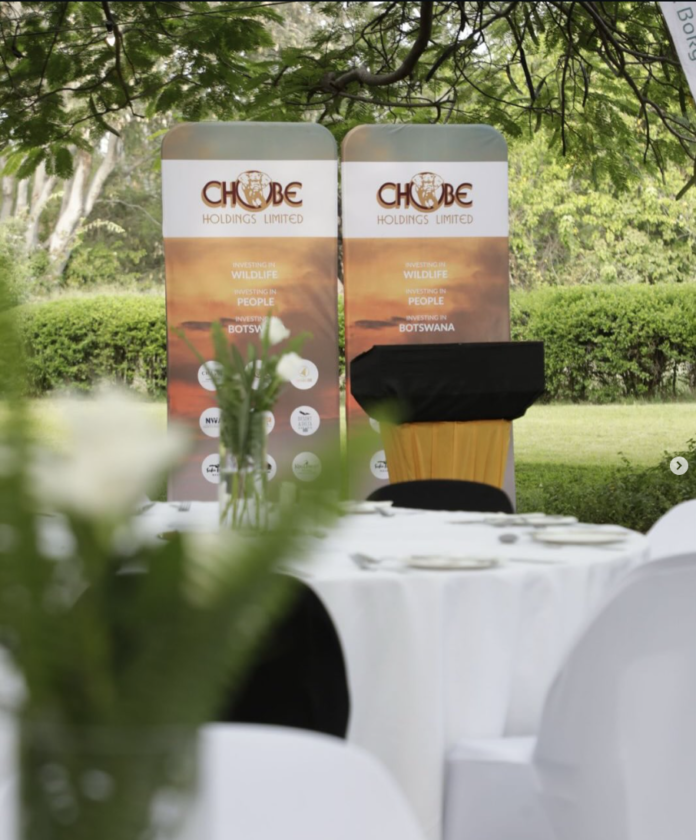
John was among 12 entrepreneurs who completed the seven-month business development programme run through a partnership between Chobe Holdings Limited and Barefoot Business.
Founded in 2017 and operational since 2024, Lore Innovations provides environmental impact assessments, environmental management plans and compliance documentation for projects across multiple sectors, including tourism, agriculture and infrastructure.
Founded in 2017 and operational since 2024, Lore Innovations provides environmental impact assessments, environmental management plans and compliance documentation for projects across multiple sectors, including tourism, agriculture and infrastructure.
The company’s emergence reflects changes in Botswana’s economy, where environmental considerations are becoming increasingly important in project planning and implementation.
Government regulations require many developments to assess and mitigate environmental risks before receiving approval. At the same time, investors and financiers are placing greater emphasis on sustainability and environmental governance standards.
This has created a growing market for specialised firms capable of helping businesses and developers meet regulatory requirements while managing environmental risks.
For locally owned consultancies, however, technical expertise alone is often not enough to secure growth.
Many small firms face challenges related to business development, client acquisition, financial management and scaling operations. These challenges are particularly acute for specialised professional services businesses, where founders frequently possess strong technical knowledge but limited formal business training.
According to programme organisers, John entered the Maun Business Collective with an established business and used the programme to strengthen its operational foundations.
Over seven months, participants received training in financial management, taxation, leadership, strategic marketing, business planning and operational efficiency, supported by one-on-one coaching sessions and peer accountability groups.
For a consultancy operating in a knowledge-based sector, business systems and planning can be just as important as technical capability.
Winning contracts often depends on client relationships, competitive positioning, proposal development and the ability to deliver services consistently as workloads increase.
As demand for environmental compliance services continues to rise, firms capable of combining technical expertise with sound business management are likely to find new opportunities.
The growth of firms such as Lore Innovations also points to the gradual diversification of the economy in northern Botswana.
While Maun remains synonymous with tourism, a growing number of professional service providers are establishing businesses that support development across multiple sectors. Environmental consulting, engineering support, information technology services and specialised training are becoming increasingly visible components of the local economy.
As demand for environmental compliance services continues to rise, firms capable of combining technical expertise with sound business management are likely to find new opportunities.
For Lore Innovations, the challenge now is to build on that foundation.
With environmental considerations becoming an increasingly important part of business and development planning, the company is seeking to establish itself in a sector that is expected to play a growing role in Botswana’s economic future.


